Literary Fiction

Literary fiction reviews: character-driven, thematically complex works of contemporary and classic literature.

  • The Corrections

    Jonathan Franzen’s The Corrections, published in 2001 by Farrar, Straus and Giroux, tells the story of the Lambert family as they spiral toward what matriarch Enid Lambert hopes will be “one last Christmas” together in their fictional Midwestern hometown of St. Jude. Alfred Lambert, Enid’s husband and a retired railroad engineer, is losing ground to…
  • Homegoing

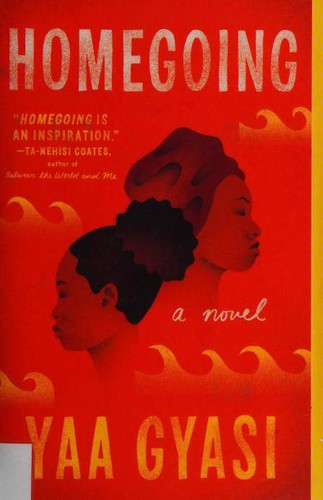
    Yaa Gyasi’s debut novel, published in 2016, takes on an almost impossible formal challenge and meets it with a confidence that seems improbable in a first book. Homegoing traces two branches of a Ghanaian family across seven generations-from the early eighteenth century to the present day-moving in alternating chapters between the descendants of two half-sisters:…

  • Pachinko

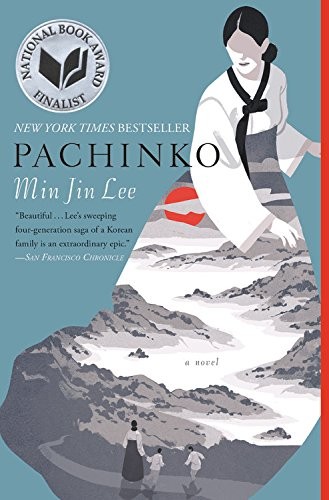
    Pachinko, Min Jin Lee’s second novel, published in 2017 by Grand Central Publishing, follows four generations of a Korean family living in Japan across nearly eighty years. The story begins in 1910 in a small fishing village in Yeongdo, Korea, where a young woman named Sunja becomes pregnant by Hansu, a wealthy, married Korean businessman…

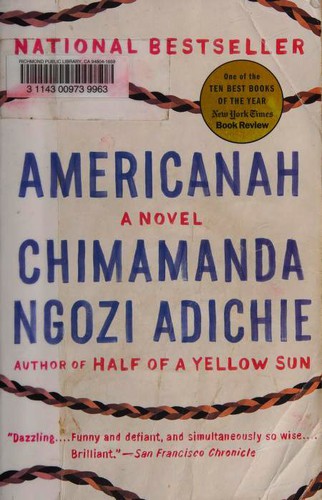
  • Americanah

    Chimamanda Ngozi Adichie’s third novel, published in 2013, is her most expansive and most explicitly political-a novel about race in America and race in Nigeria, about the differences between them, and about what happens when an African woman arrives in America and discovers she has become “Black” in a way she was not in Lagos….

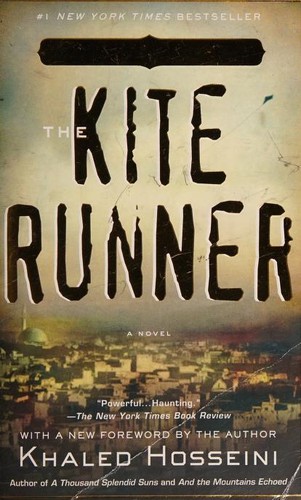
  • The Kite Runner

    Khaled Hosseini’s debut novel, published in 2003, became one of the defining literary phenomena of its decade-not because it was formally innovative, which it was not, but because it told a story that millions of readers needed to read and had no other means of accessing: the story of Afghanistan before and after the Soviet…

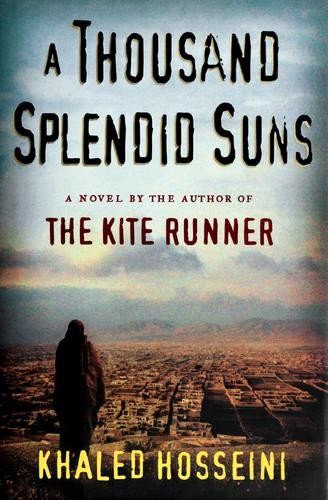
  • A Thousand Splendid Suns

    Khaled Hosseini’s second novel, A Thousand Splendid Suns, arrived in 2007 on the heels of The Kite Runner’s massive success and promptly proved that his debut was no fluke. Where The Kite Runner told the story of two boys in a fractured friendship, this novel turns its attention to two women whose lives collide inside…

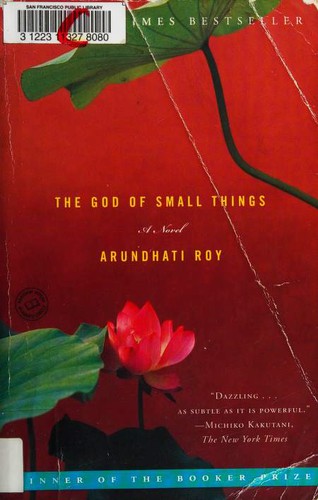
  • The God of Small Things

    Arundhati Roy published The God of Small Things in 1997, won the Booker Prize, and then did not publish another novel for twenty years. The silence is in one sense mysterious and in another sense comprehensible: The God of Small Things is a novel that fully expended its author’s accumulated literary intelligence, a book in…

  • The Goldfinch

    Donna Tartt spent eleven years writing The Goldfinch, as she had spent eleven years writing The Little Friend before it, and the decade-plus gestation is visible in the book: it is dense, novelistically ambitious, occasionally over-furnished, and alive in ways that more efficiently produced fiction often is not. It won the Pulitzer Prize in 2014…

  • The Secret History

    Donna Tartt’s debut novel, published in 1992, reversed the standard structure of the crime novel with a gesture of formal audacity that has been widely imitated and never quite equaled. We learn on the first page that the narrator, Richard Papen, was complicit in the murder of his friend Bunny Corcoran. The novel then backtracks…

  • The Hours

    Michael Cunningham’s The Hours, published in 1998 and winner of both the Pulitzer Prize and the PEN/Faulkner Award, is one of those works that succeeds both as homage and as independent creation-a rarity in novels built explicitly on other novels. It is a meditation on Virginia Woolf’s Mrs. Dalloway structured as a triptych: one section…