
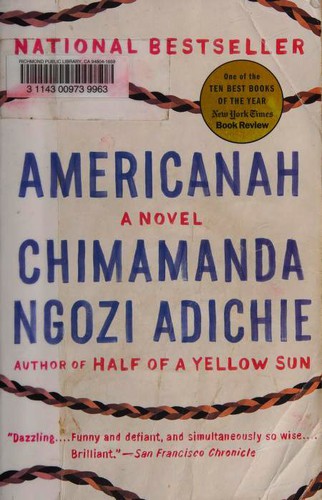
Americanah
Anchor Books · 2013 · 477 pages
ISBN: 9780307455925
Review Editor
Eleanor Marsh
Chimamanda Ngozi Adichie’s third novel, published in 2013, is her most expansive and most explicitly political-a novel about race in America and race in Nigeria, about the differences between them, and about what happens when an African woman arrives in America and discovers she has become “Black” in a way she was not in Lagos. It is also, at its spine, a love story-the kind that believes love is insufficient against the pressure of the world and insists on showing you exactly why.
Ifemelu leaves Nigeria for America with her boyfriend Obinze, whose own trajectory-to England, to deportation, to wealth in Lagos-runs parallel to hers. In America, she studies, works a series of undignified jobs, discovers racial categories she did not know applied to her, and begins writing an anonymous blog about race in America as seen from a non-American Black perspective. The blog sections, which Adichie reproduces at length, are among the most pointed social commentary in recent literary fiction-funny, sharp, uncompromising.
The novel’s dual structure-Ifemelu’s America, Obinze’s England and Lagos-allows Adichie to triangulate between three cultures and trace the particular ways race, class, and gender interact in each. Her rendering of Nigeria is as specific and unsentimental as her rendering of America; she is not interested in allowing either place an easy moral advantage.
Adichie writes with lucidity and confidence, and her prose carries the social intelligence of someone who has thought carefully about every sentence’s implications. Americanah is a novel that teaches its readers how to read it-and then asks whether they’ve been paying attention.
Book Details
- Title
- Americanah
- Author
- Chimamanda Ngozi Adichie
- Genre
- Literary Fiction
- Publisher
- Anchor Books
- Year Published
- 2013
- Pages
- 477
- ISBN
- 9780307455925
- WritersReview Rating
- 5.0 / 5