Literary Fiction

Literary fiction reviews: character-driven, thematically complex works of contemporary and classic literature.

  • Invisible Cities

    Italo Calvino’s Invisible Cities is one of the strangest and most beautiful objects in twentieth-century literature. Published in Italian in 1972 and translated into English by William Weaver in 1974, it consists of 55 short prose pieces in which the explorer Marco Polo describes imaginary cities to an aging Kublai Khan. The cities are not…

  • Olive Kitteridge

    Summary Olive Kitteridge is a linked story collection published by Elizabeth Strout in 2008 that won the Pulitzer Prize for Fiction the following year. Its organizing figure, Olive Kitteridge herself, is a retired mathematics teacher in the small coastal Maine town of Crosby, and she is not, by any conventional measure, a likeable person. She…

  • The Portrait of a Lady

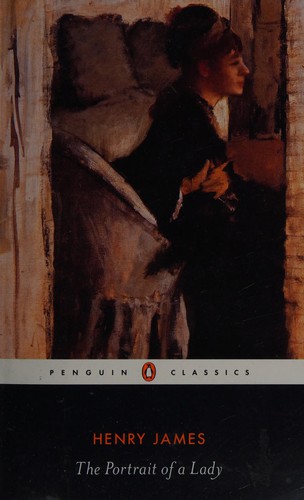
    Henry James published The Portrait of a Lady in 1881 and created what many critics consider the first fully modern novel in English. Its subject is a young American woman who comes to Europe with ideals about freedom and independence and discovers that freedom, when it arrives in the form of money, is not the…

  • The Wind-Up Bird Chronicle

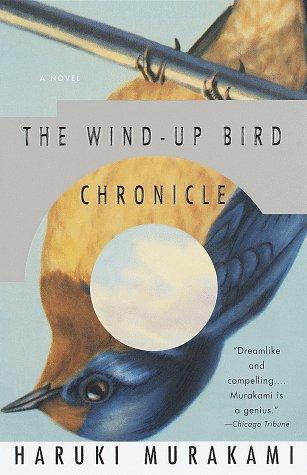
    Haruki Murakami published The Wind-Up Bird Chronicle in Japanese in 1994-1995 and in English translation in 1997, and it announced something that his earlier novels had suggested: that he was capable of a sustained ambition that exceeded the charming, melancholic registers of Norwegian Wood and the playful surrealism of A Wild Sheep Chase. The novel…

  • Invisible Man

    Summary Ralph Ellison published Invisible Man in 1952, and it won the National Book Award that year, and it has not stopped being relevant. The novel follows an unnamed Black narrator from his humiliating graduation ceremony in a Southern town, where he is made to participate in a staged brawl before an audience of drunken…

  • Passing

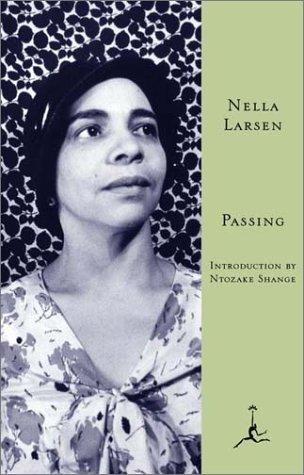
    Nella Larsen’s Passing is one of the most compressed and psychologically dense novels of the Harlem Renaissance. At 96 pages, it is barely a novella, yet it contains more sustained ambiguity than most novels five times its length. Published in 1929 and largely forgotten until the 1970s, when Black feminist scholars began the work of…

  • The Sun Also Rises

    Ernest Hemingway published The Sun Also Rises in 1926, and the novel immediately named something that Americans and Europeans were still trying to understand about themselves: the damage that World War I had done to a generation’s sense of purpose, pleasure, and identity. The title comes from Ecclesiastes – “The sun also rises, and the…

  • Jonathan Strange and Mr Norrell

    Susanna Clarke published Jonathan Strange and Mr Norrell in 2004 after ten years of writing, and the novel was recognized immediately as something extraordinary. It won the Hugo Award and the Whitbread First Novel Award and made its author, briefly, the most discussed debut novelist in English. Clarke had written a book that was simultaneously…

  • A Farewell to Arms

    Ernest Hemingway finished A Farewell to Arms in 1929, writing and rewriting the ending dozens of times before he found the version that satisfied him – or rather, the version that satisfied him least badly. The novel is a war story and a love story, and in Hemingway’s telling those two things are not opposites…

  • A Room with a View

    E.M. Forster published A Room with a View in 1908, and it remains the most immediately pleasurable of his novels-lighter than Howards End, less politically charged than A Passage to India, possessed of a comic ease that occasionally disguises the seriousness of its social observation. It is a novel about the relationship between convention and…