
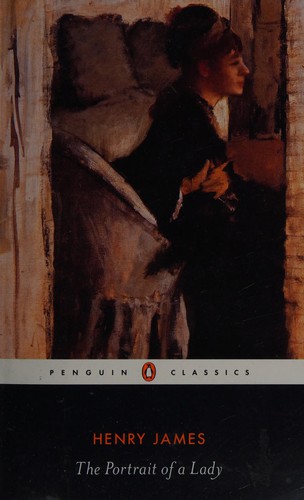
The Portrait of a Lady
Penguin Classics · 1881 · 626 pages
ISBN: 9780140432458
Review Editor
admin
Henry James published The Portrait of a Lady in 1881 and created what many critics consider the first fully modern novel in English. Its subject is a young American woman who comes to Europe with ideals about freedom and independence and discovers that freedom, when it arrives in the form of money, is not the same as freedom from the designs of other people. James’s technique – the sustained, fine-grained rendering of a consciousness in the process of understanding its own situation – is the foundation of a tradition that runs through Virginia Woolf and beyond.
What Happens in The Portrait of a Lady
Isabel Archer is an intelligent, proud, independent young woman from Albany, New York, who is taken to England by her aunt, Mrs. Touchett, and introduced into a world she finds both exciting and suspicious. Her uncle Daniel Touchett and his son Ralph become deeply fond of her. When Daniel dies, Ralph persuades him to leave a large portion of his estate to Isabel – so that she can, as Ralph puts it, be free to do whatever she likes with her life.
Isabel refuses the well-intentioned proposals of two men who would have given her a comfortable life: Lord Warburton, an English aristocrat, and Caspar Goodwood, an American businessman who loves her persistently. She goes to Florence, where she encounters the American expatriate Gilbert Osmond, a dilettante of refined taste and no money, and his friend Madame Merle, who is charming and accomplished in ways that Isabel admires without fully understanding.
Isabel marries Osmond. The marriage is a catastrophe. Osmond wants her money and her pliability, and he has precisely neither. The novel’s second half tracks the slow revelation of what Isabel has walked into and what she will do about it.
Isabel Archer
Isabel is one of the great creations of American fiction. She is also, and deliberately, deeply flawed in the specific way that intelligence and pride produce flaws: she is so confident in her own judgment, so convinced that she can see through conventional behavior to the truth beneath, that she walks directly into the trap that Osmond and Madame Merle have laid for her.
James is not cruel to her. He shows the exact mechanism of her error: she mistakes Osmond’s superficial refinement for depth, his fastidiousness for principle, his contempt for everything around him for discrimination. She is wrong about him in the way that intelligent people are sometimes spectacularly wrong: by filtering everything through their own assumptions.
Gilbert Osmond
Osmond is one of the most carefully constructed villains in English literature. He is not melodramatic or obviously threatening. He is simply a man who has reduced his life to the cultivation of taste and who regards other people – including his wife – as objects to be arranged or displayed. His cruelty is expressed through silence, through irony, through the precise withdrawal of approval. He is believable in a way that simpler villains are not.
James’s Method
The novel’s famous Chapter 42 – in which Isabel sits alone at night and thinks – is considered the founding document of the psychological novel. James spends an entire chapter inside Isabel’s consciousness as she processes what her marriage has cost her. Nothing happens externally; everything happens internally. The effect is that the reader understands Isabel more fully than she has been understood by any character in the book.
James’s prose demands active reading. His sentences are long, qualified, attentive to what they do not quite say. This is not obscurity for its own sake; it is the formal equivalent of human consciousness, which does not proceed in simple declarative sentences.
Who This Book Is For
Readers who want a novel that takes seriously the inner life of an intelligent woman, who can sit with long, complex sentences, and who are interested in the founding documents of the modern novel will find The Portrait of a Lady essential and endlessly rewarding. It is not an easy book, but it is a great one.
- Is The Portrait of a Lady difficult to read?
- James’s style is demanding. His sentences accumulate qualifications and conditional clauses in ways that require slow, attentive reading. Most readers find that the difficulty decreases as they adjust to the prose, and that the rewards are proportionate to the attention given.
- What is the significance of the title?
- The title frames the novel as a kind of portrait – an attempt to render a person in full through accumulated detail and careful observation. James was interested in what a novel could do that a painted portrait could not: show the consciousness, the interiority, the becoming rather than the arrested moment.
- Does Isabel leave Osmond?
- The novel ends with Isabel returning to Rome and to Osmond, which many readers find frustrating. James’s ending is not a capitulation to convention; it is a statement about Isabel’s character and her sense of obligation. Her reasons are complex and, James suggests, worthy of respect even if they are costly.
- Who is Madame Merle?
- She is the novel’s other great female creation: a woman of perfect social accomplishment and no moral compunction, who has had a long relationship with Osmond and who uses Isabel for Osmond’s benefit. Her eventual fate is a quiet devastation that James renders with characteristic understatement.
- Is there a film adaptation?
- Jane Campion directed a film in 1996 starring Nicole Kidman as Isabel and John Malkovich as Osmond. It is one of the more ambitious literary adaptations of the decade, though it takes significant creative liberties with James’s text and tone.
- What is Pansy Osmond’s role?
- Osmond’s daughter from a previous relationship is one of the novel’s most important secondary characters: a girl so thoroughly shaped by her father’s will that she has almost no will of her own. Her situation illuminates what Osmond wants from Isabel, and her fate is among the novel’s most unsettling elements.
- Should I read the 1881 version or the 1908 revised version?
- James revised the novel extensively for the New York Edition of 1908, making the prose denser and more characteristic of his late style. Most modern editions use the 1908 text. Some readers prefer the somewhat lighter 1881 original. The difference is significant and the choice matters.
- Is Caspar Goodwood the right man for Isabel?
- He loves her with more persistence and genuine feeling than any other man in the novel. Whether that makes him the right man depends on what Isabel wants, and the novel is ultimately more interested in Isabel’s freedom to choose than in whether her choices are correct.
Book Details
- Title
- The Portrait of a Lady
- Author
- Henry James
- Genre
- Literary Fiction
- Publisher
- Penguin Classics
- Year Published
- 1881
- Pages
- 626
- ISBN
- 9780140432458
- WritersReview Rating
- 4.0 / 5