Literary Fiction

Literary fiction reviews: character-driven, thematically complex works of contemporary and classic literature.

  • The Tin Drum

    Gunter Grass published The Tin Drum in 1959, and the novel arrived like a percussion blast into the genteel silence of postwar German literature. Germany had been rebuilding itself – economically, politically, psychologically – and had produced relatively little honest reckoning with what had just happened. Grass, who had himself served in the Waffen-SS as…

  • Station Eleven

    Emily St. John Mandel’s Station Eleven was published in 2014, years before COVID-19 made pandemic fiction feel prophetic rather than speculative. The novel describes a flu that kills most of humanity within weeks and then, in its more expansive sections, follows a traveling Shakespearean theater company through the Great Lakes region twenty years after the…

  • Pedro Paramo

    Juan Rulfo published Pedro Paramo in 1955, and it changed what the Latin American novel could do. The book is short – barely 120 pages in most editions – and its effects are proportionally large. Gabriel Garcia Marquez said he could recite it from memory. Jorge Luis Borges called it one of the great works…

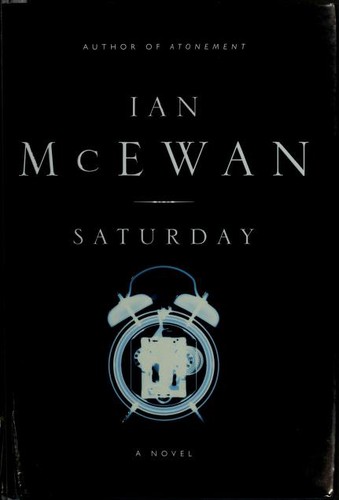
  • Saturday

    Ian McEwan’s Saturday follows a single day in the life of a London neurosurgeon. Published in 2005, it unfolds on February 15, 2003 – the day of the global anti-Iraq War demonstrations, the largest coordinated protest in human history up to that point. Henry Perowne wakes before dawn, watches a burning plane cross the sky…

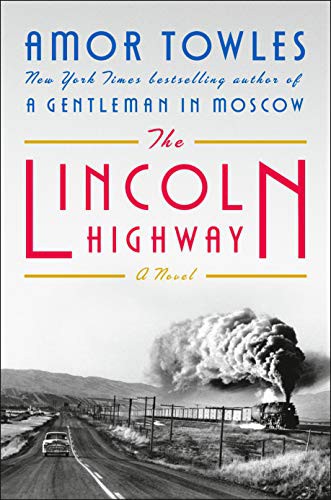
  • The Lincoln Highway

    Amor Towles published The Lincoln Highway in 2021, eight years after Rules of Civility and five years after A Gentleman in Moscow. His third novel arrived with high expectations and met most of them: a genuine page-turner with literary ambitions, a novel that uses its period setting – America in June 1954 – to examine…

  • The Age of Innocence

    Edith Wharton won the Pulitzer Prize for Fiction for The Age of Innocence in 1921, becoming the first woman to receive the award. The prize recognized a novel about 1870s New York society that operated as a kind of double portrait: a loving reconstruction of a world Wharton had been born into and a precise…

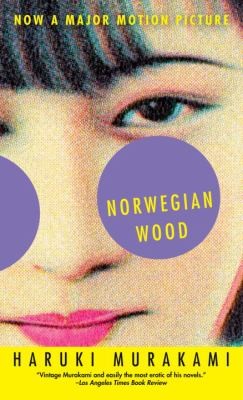
  • Norwegian Wood

    Summary Norwegian Wood is the novel Haruki Murakami wrote to prove he could do something different. His earlier work had leaned into fantasy and surrealism. This one is set entirely in the real world, in Tokyo in the late 1960s, and it is about grief so direct it is almost uncomfortable to look at. Toru…

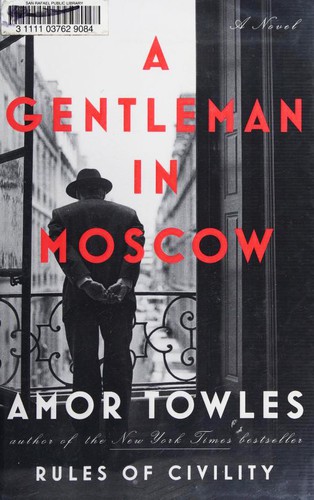
  • A Gentleman in Moscow

    In 1922, Count Alexander Ilyich Rostov, a man of impeccable breeding and a poet of minor renown, is sentenced by a Bolshevik tribunal to spend the rest of his life inside Moscow’s Metropol Hotel. The charge is essentially being too aristocratic. The punishment, in its way, is almost whimsical: rather than execution, the Count is…

  • A Fine Balance

    Rohinton Mistry’s A Fine Balance is one of the great novels about catastrophe – personal, political, and the way these two things are never truly separate. Set in India during Indira Gandhi’s Emergency of 1975 to 1977, a period when civil liberties were suspended and forced sterilizations were carried out as population policy, the novel…