Margaret Atwood
Margaret Eleanor Atwood was born on November 18, 1939, in Ottawa, Ontario, Canada. Her father was a forest entomologist, and she spent much of her early childhood in the remote wilderness of northern Quebec and Ontario, where her family lived during her father’s research seasons. This unusual upbringing — half in the bush, half in the city — gave Atwood both a naturalist’s eye for close observation and a detached, ironic perspective on urban civilization. She began writing poetry at the age of six and was publishing seriously by her teens. She completed her undergraduate degree at Victoria College, University of Toronto, then earned a master’s degree from Radcliffe College at Harvard University, where she began doctoral work before turning her full attention to creative writing.
Atwood established herself first as a poet — her 1966 collection The Circle Game won the Governor General’s Award, Canada’s highest literary honor — and then as a novelist of fierce intelligence and formal versatility. Her early novels, including Surfacing (1972) and Lady Oracle (1976), explored questions of female identity, national mythology, and the grotesque. She also became an important critic of Canadian literature, arguing in her influential study Survival: A Thematic Guide to Canadian Literature (1972) that Canadian writing was defined by its preoccupation with victimhood and survival — a thesis that proved as controversial as it was generative.
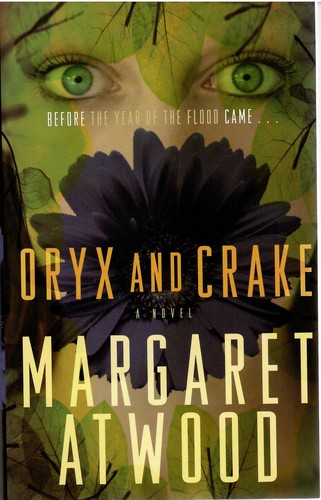
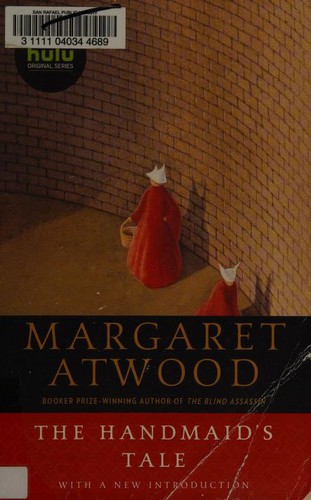
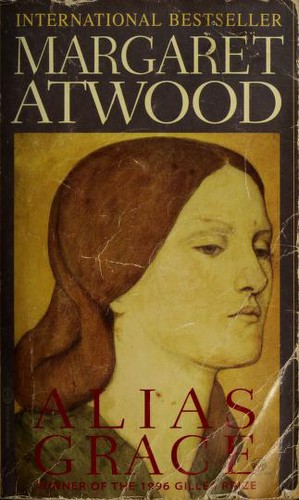
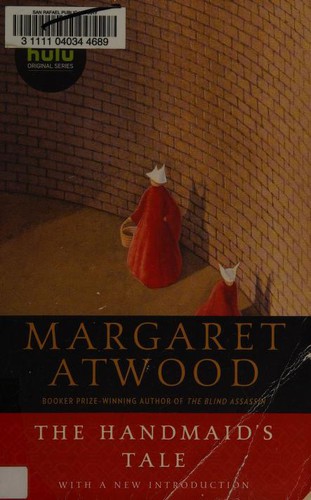
Among her novels on WritersReview, The Handmaid’s Tale (1985), Oryx and Crake (2003), and Alias Grace (1996) represent three distinct facets of her achievement. The Handmaid’s Tale, her most celebrated work, is a dystopian novel set in the near-future Republic of Gilead, a theocratic regime that has reduced fertile women to reproductive servitude. Narrated by a woman identified only as Offred, the novel is at once a political warning, a feminist analysis of patriarchal control over women’s bodies, and a meditation on the fragility of the freedoms we take for granted. Its 2017 television adaptation brought it to a vast new audience amid renewed political anxieties. Oryx and Crake launches Atwood’s MaddAddam trilogy, a speculative fiction sequence set after a bioengineered pandemic has devastated human civilization. Alias Grace is a meticulously researched historical novel based on the true story of Grace Marks, a nineteenth-century Canadian woman convicted of murder whose guilt or innocence remains irresolvable.
Atwood’s prose is precise, witty, and ferociously intelligent, characterized by an ironic distance that never tips into coldness, and by a structural ingenuity that makes every novel feel formally as well as thematically ambitious. She moves with apparent ease between realism, speculative fiction, gothic horror, and historical narrative. Her poetry, essays, and short fiction have added further dimensions to a body of work remarkable for both its range and its consistency of quality. She is also a gifted visual artist and has created artwork for several of her book covers.
The recipient of the Booker Prize twice — for The Blind Assassin (2000) and the jointly awarded The Testaments (2019), the sequel to The Handmaid’s Tale — as well as the Arthur C. Clarke Award, the Governor General’s Award (multiple times), and numerous honorary degrees from universities worldwide, Atwood is widely regarded as the pre-eminent living Canadian writer and one of the most important novelists in the English language. Her work has been translated into more than forty languages and continues to generate scholarly debate, popular enthusiasm, and political resonance in equal measure.