Ian McEwan
Ian McEwan was born on June 21, 1948, in Aldershot, Hampshire, England, the son of a Scottish army officer. His early childhood was spent in various postings including Singapore and Germany before he settled in England to attend schools in Suffolk and later Woolwich. He studied English at the University of Sussex before completing his MA in creative writing at the University of East Anglia under Malcolm Bradbury and Angus Wilson, becoming among the first cohort of writers to emerge from a formal creative writing program in Britain. His UEA contemporaries included Kazuo Ishiguro, and the program gave him the space and encouragement to develop the dark, unsettling early stories that would make his reputation.
McEwan’s debut story collection First Love, Last Rites (1975) won the Somerset Maugham Award and immediately established him as a significant new voice — one willing to explore perverse, transgressive, and violent subject matter with a cool formal precision that distinguished him from both the gothic excess and the kitchen-sink realism of his contemporaries. His early nickname ‘Ian Macabre’ reflected the unsettling tenor of this early work. His debut novel, The Cement Garden (1978), was a disturbing exploration of adolescent isolation and taboo, and The Comfort of Strangers (1981) continued in a darker vein. But McEwan’s range gradually expanded to encompass broader social and historical concerns.
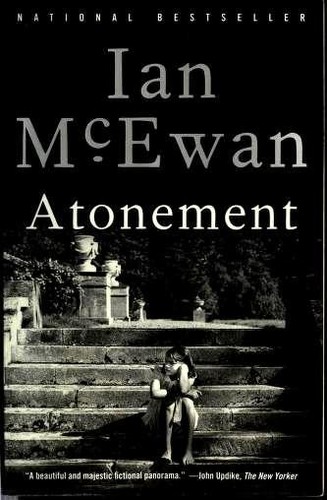
Atonement, published in 2001, is widely considered his masterpiece. Set in an English country house in 1935 and then moving through wartime France and London, it tells the story of thirteen-year-old Briony Tallis, whose false accusation of the wrong man for a sexual assault destroys the lives of her sister Cecilia and the man they both love, Robbie Turner. The novel is a meditation on the nature of memory, guilt, the moral power of fiction, and the writer’s responsibility to truth. Its final section, a formal tour de force in which the entire novel’s status as imaginative construction is revealed, is one of the most sophisticated narrative moves in contemporary fiction. The novel was shortlisted for the Booker Prize and adapted into a celebrated 2007 film.
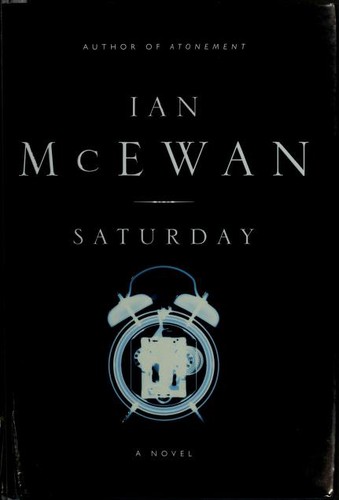
Saturday (2005), following a London neurosurgeon through a single day in February 2003 — the day of the massive anti-Iraq War march in London — is a novel of remarkable formal control that uses the Woolfian single-day structure to examine questions of privilege, security, and the fragility of civilized life. McEwan’s prose style in his mature work is lucid, measured, and precise, with a gift for the closely observed detail and the sharply turned scene. He writes from a position of informed engagement with science, medicine, law, and music, and his fiction is enriched by a genuine intellectual curiosity about how the world works.
Ian McEwan is one of the most highly regarded British novelists of his generation, winner of the Booker Prize for Amsterdam (1998) and shortlisted multiple times. His body of work — spanning nearly fifty years of consistent excellence — represents a sustained engagement with the moral and psychological dilemmas of contemporary life, rendered with the craft and intelligence of a writer at the top of his form.