Cormac McCarthy
Cormac McCarthy was born on July 20, 1933, in Providence, Rhode Island, and raised in Knoxville, Tennessee, where his father was a lawyer for the Tennessee Valley Authority. He attended the University of Tennessee, leaving twice without a degree, and served in the United States Air Force before returning to writing. His early life was marked by a monastic dedication to his craft and an almost willful indifference to commercial success. He lived in extreme poverty for years, writing in motels and rented rooms, refusing the compromises of literary careerism. His marriage to Annie DeLisle in the 1960s was partly sustained by a Rockefeller Foundation grant; the marriage eventually broke apart, in part under the weight of his uncompromising commitment to his work over financial stability.
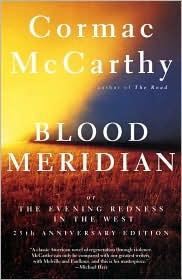
McCarthy’s first four novels — including Outer Dark (1968) and Child of God (1973) — established him as a writer of violent, archaic Appalachian fiction in the tradition of Faulkner, though even more bleak in their vision. These books found a serious readership but limited commercial success. The publication of Blood Meridian, or the Evening Redness in the West in 1985 marked a watershed moment: widely ignored on publication, the novel was gradually recognized as one of the greatest American novels ever written, a hallucinatory account of a teenage runaway who joins a scalp-hunting gang on the Texas-Mexico border in the 1840s that functions simultaneously as a Western, an epic, and a philosophical meditation on the nature of evil and human violence.
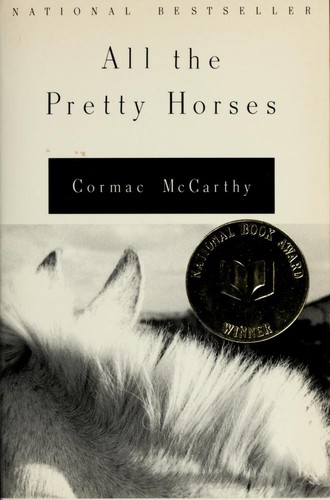
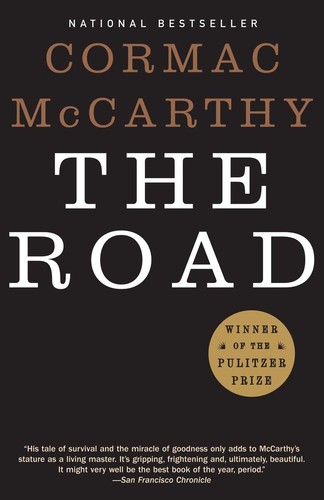
With the Border Trilogy — All the Pretty Horses (1992), The Crossing (1994), and Cities of the Plain (1998) — McCarthy shifted to the landscapes of the American Southwest and Mexico, producing more accessible but no less morally serious fiction. All the Pretty Horses won the National Book Award and the National Book Critics Circle Award and became a bestseller, introducing McCarthy to a much wider audience. The trilogy traces young men navigating the end of the frontier era, caught between a vanishing West of horses and horses and the encroaching modern world. The Road (2006), a post-apocalyptic novel of a father and son traversing a destroyed America, won the Pulitzer Prize and became a global bestseller.
McCarthy’s prose style is among the most distinctive in American letters: he eschews quotation marks, most punctuation, and conventional dialogue tags, creating a narrative surface that is austere, biblical, and hypnotic. His sentences can extend for pages in long, subordinate cascades, or compress into hard monosyllabic declarations. The effect is of language stripped to essentials, pressing close to the wordless terror and beauty of the world it describes. His philosophical preoccupations — with violence, mortality, the indifference of the natural world, and the fragile bonds of love — give his work a mythic weight that distinguishes it from any tradition except its own.
Cormac McCarthy died on June 13, 2023, leaving behind one of the most formidable bodies of work in American literary history. His influence on subsequent generations of writers — particularly those drawn to dark, elemental subject matter and unconventional prose — has been immense. Blood Meridian, All the Pretty Horses, and The Road stand as essential American texts, works that grapple with the violence and beauty at the heart of the national experience with unsparing moral courage.