Book Reviews

  • A Room with a View

    E.M. Forster published A Room with a View in 1908, and it remains the most immediately pleasurable of his novels-lighter than Howards End, less politically charged than A Passage to India, possessed of a comic ease that occasionally disguises the seriousness of its social observation. It is a novel about the relationship between convention and…
  • The Virgin Suicides

    Jeffrey Eugenides’s debut novel, published in 1993, opens with one of the most arresting first sentences in contemporary American fiction-”On the morning the last Lisbon daughter took her life, neighbors were trying to figure out exactly why”-and sustains the tension of that opening across a novel of unusual formal ingenuity and emotional restraint. The five…

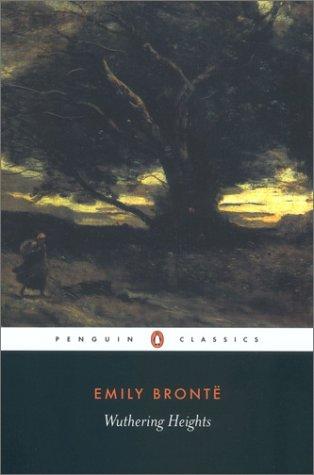
  • Wuthering Heights

    Emily Brontë’s only novel, published in 1847 under the pseudonym Ellis Bell, was received with a mixture of hostility and bewilderment that feels, in retrospect, like the appropriate response to something genuinely new. Wuthering Heights is not a love story in any ordinary sense; it is a study in obsession and its costs, written in…

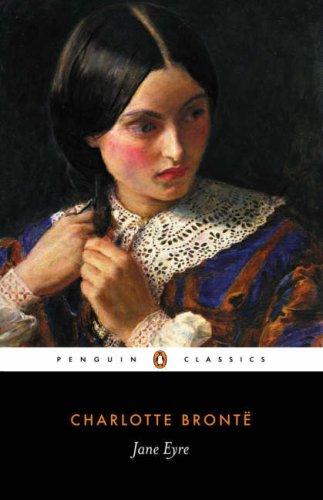
  • Jane Eyre

    Charlotte Brontë published Jane Eyre in 1847 under the name Currer Bell, and its success was immediate and enormous-a contrast to her sister Emily’s Wuthering Heights, published the same year, which would wait for posthumous recognition. Jane Eyre is the more accessible novel: it has a linear narrative, a recognizable protagonist whose development we follow…

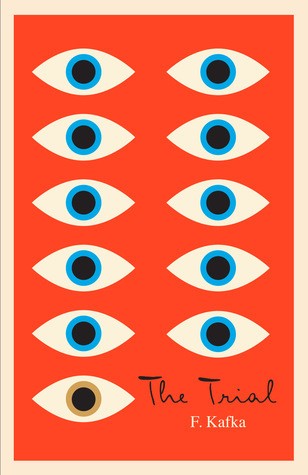
  • The Trial

    Franz Kafka never completed The Trial, and his instructions to Max Brod were to burn the manuscript. Brod published it instead in 1925, the year after Kafka’s death, and literary history is in his debt. The novel-fragmentary, nonlinear, deliberately incomplete-has become one of the founding texts of twentieth-century literature, and the adjective derived from its…

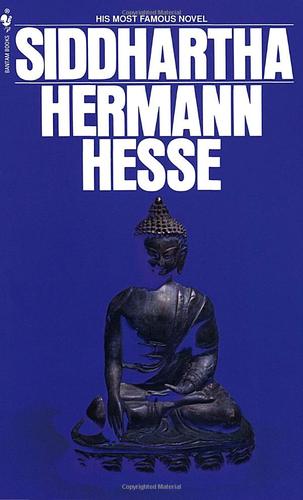
  • Siddhartha

    Hermann Hesse published Siddhartha in 1922, drawing on years of study of Eastern philosophy and religion, and produced a work that is less novel than prose poem-a philosophical parable written in a style of deliberate simplicity that belies its intellectual seriousness. It was not the novel that won Hesse the Nobel Prize in 1946; that…

  • Lolita

    Vladimir Nabokov’s Lolita, published in Paris in 1955 after being rejected by four American publishers, remains one of the most discussed, most argued-about, most challenging novels in the Western tradition. The challenge is not merely moral but formal: Humbert Humbert, the pedophile narrator who abuses a twelve-year-old girl across two years and a continent, is…

  • The Master and Margarita

    Mikhail Bulgakov completed The Master and Margarita in the late 1930s, as Stalin’s Terror was at its height, and the novel was not published until 1967-decades after his death, in a censored version, in a Soviet Union that had already destroyed one version of the manuscript and would not have permitted the full version. Its…

  • Go Tell It on the Mountain

    James Baldwin’s first novel, published in 1953 when he was twenty-eight, is a semi-autobiographical portrait of a single day-a Saturday in March, 1935-in a Harlem Pentecostal church, and the lives of the Grimes family whose souls are in contention there. It is a novel saturated with the language and rhythm of the Black church, the…

  • Giovanni’s Room

    James Baldwin published Giovanni’s Room in 1956-as a young Black American writer living in France, writing about white characters whose primary struggle is with homosexual desire-and the novel was rejected by his American publishers, who believed it would end his career. That it did not, that it instead became a cornerstone of LGBTQ literature and…