
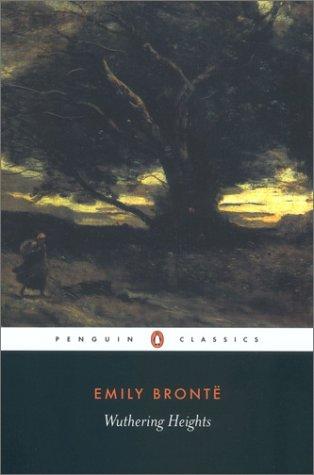
Wuthering Heights
Penguin Classics · 1847 · 342 pages
ISBN: 9780141439556
Review Editor
Eleanor Marsh
Emily Brontë’s only novel, published in 1847 under the pseudonym Ellis Bell, was received with a mixture of hostility and bewilderment that feels, in retrospect, like the appropriate response to something genuinely new. Wuthering Heights is not a love story in any ordinary sense; it is a study in obsession and its costs, written in a structural form that is more complex than it first appears, narrated by characters with limited and competing perspectives, set in a landscape that is as much psychological as geographical.
The novel’s formal audacity is easy to miss: it is told through a frame narrator (Lockwood, a tenant of Heathcliff’s) who is hearing the story from Nelly Dean, a servant who was present through most of the events. These nested narratives create a permanent uncertainty about what actually happened and what the narrators are selecting, misremembering, or suppressing. Brontë uses this instability not as postmodern trick but as a representation of the way traumatic events resist straightforward narration.
Heathcliff, the foundling whom the elder Earnshaw brings home from Liverpool, is one of literature’s most magnetic characters: passionate, brutal, vengeful, and possessed of a love for Catherine that reads less as romantic devotion than as the merger of two consciousnesses that the social order tears apart. His revenge-methodical, generational, destroying both the Earnshaw and Linton families-is presented with moral ambiguity: we understand it, we are appalled by it, we are unable to look away.
Wuthering Heights is not a comfortable novel, and it is not, in the ordinary sense, a sympathetic one. It is something rarer: a vision of passion at its most extreme, rendered in prose of considerable beauty, by a writer who seems to have imagined this world with unusual completeness in the course of a short life.
Book Details
- Title
- Wuthering Heights
- Author
- Emily Brontë
- Genre
- Literary Fiction
- Publisher
- Penguin Classics
- Year Published
- 1847
- Pages
- 342
- ISBN
- 9780141439556
- WritersReview Rating
- 5.0 / 5