Virginia Woolf
Adeline Virginia Stephen was born on January 25, 1882, in London, the daughter of the eminent Victorian man of letters Sir Leslie Stephen and his second wife Julia Duckworth. She grew up in a large, intellectually stimulating household in Kensington that included her siblings Vanessa, Thoby, and Adrian, and a steady stream of distinguished visitors from the literary and academic world. The early deaths of her mother in 1895 and her beloved half-sister Stella in 1897, followed by her father’s death in 1904, precipitated a series of serious mental breakdowns that would recur throughout her life. She received no formal education, taught herself from her father’s vast library, and resented deeply the exclusion of women from the universities her brothers attended — an injustice that animated her feminist essays A Room of One’s Own and Three Guineas.
After her father’s death, Virginia and her siblings moved to Bloomsbury, where they became the nucleus of the celebrated Bloomsbury Group, whose members included the economist John Maynard Keynes, the art critic Roger Fry, the biographer Lytton Strachey, and the painter Duncan Grant. In 1912 she married the writer and political thinker Leonard Woolf, who became the devoted manager of her emotional and practical life. Together they founded the Hogarth Press in 1917, which published not only Woolf’s own novels but works by T.S. Eliot, Katherine Mansfield, and the first English translation of Freud’s complete works.
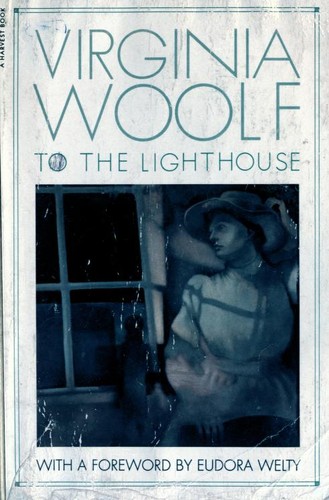
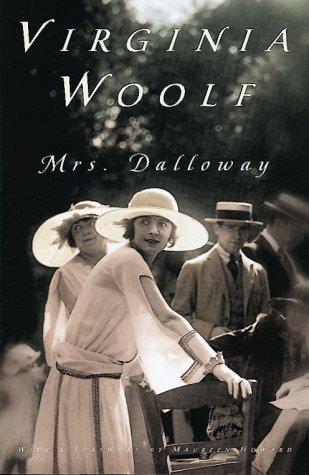
Woolf’s mature novels represent the most sustained and successful attempt in English fiction to render the full texture of consciousness as it actually moves through time. Mrs. Dalloway (1925), set over the course of a single day in London as Clarissa Dalloway prepares for a party, perfected the stream-of-consciousness technique she had been developing since Jacob’s Room (1922). To the Lighthouse (1927), drawing on memories of her parents and their summer house in Cornwall, is structured in three parts that bracket a decade of absence with extraordinary formal elegance, and is widely considered her masterpiece. It renders the interior lives of its characters — their hopes, perceptions, and griefs — with a precision and beauty that has never been equalled.
Woolf’s prose style is immediately identifiable: lyrical, rhythmically complex, and attentive to the movement of thought and sensation at the finest grain. Her sentences breathe with the rhythm of consciousness, expanding and contracting with the emotional temperature of the moment, and her use of free indirect discourse to move between multiple perspectives creates a narrative texture of remarkable fluidity and depth.
Virginia Woolf died on March 28, 1941, walking into the River Ouse near her home in Sussex with stones in her pockets, having written a final letter to Leonard expressing her certainty that she was going mad again. She left behind a body of work — nine novels, numerous essays, diaries, and letters — that constitutes one of the most extraordinary literary achievements of the twentieth century. Her influence on subsequent fiction, and on feminist literary thought, has been incalculable.