
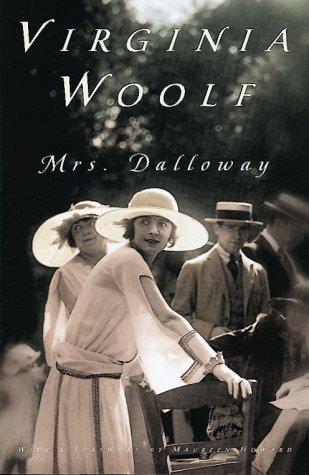
Mrs. Dalloway
Harvest Books · 1925 · 194 pages
ISBN: 9780156628709
Review Editor
Eleanor Marsh
Virginia Woolf’s fourth novel, published in 1925, takes place in a single London day-June 1923, sometime after the Armistice-and in that day contains what feels like a lifetime, or several lifetimes, or the texture of consciousness itself trying to hold a lifetime together. Mrs. Dalloway is the book in which Woolf fully developed what she called the luminous halo of life as opposed to the gig-lamps of plot, and it remains among the most radical formal achievements in the history of the novel.
Clarissa Dalloway is preparing a party. Septimus Warren Smith, a shell-shocked veteran she will never meet, is spiraling toward his death. The novel moves between them and around them, following the current of thought rather than the sequence of events, tracking the way consciousness constantly circles back, associates, leaps, mourns, celebrates. Woolf’s free indirect discourse-her technique of entering and inhabiting minds without announcing the transition-creates a peculiarly intimate effect, as though the reader is not reading about consciousness but experiencing it.
The novel’s politics are legible but never didactic. Clarissa’s social world-dinner parties, Bond Street, the residue of Empire-is observed with an unillusioned eye. The relationship between Clarissa and the domineering psychiatrist Sir William Bradshaw is one of the finest portraits of institutional power in English fiction: Bradshaw doesn’t use violence; he uses Proportion and Conversion, those twinned gods of social control. Against this, Septimus’s madness appears not as pathology but as a kind of terrible lucidity.
Mrs. Dalloway rewards rereading in the way that poetry does: each sentence, each associative leap, each moment of sensory precision yields more on return. It is a book about time, about the cost of surviving, about the party one throws as proof that one is still alive.
Book Details
- Title
- Mrs. Dalloway
- Author
- Virginia Woolf
- Genre
- Literary Fiction
- Publisher
- Harvest Books
- Year Published
- 1925
- Pages
- 194
- ISBN
- 9780156628709
- WritersReview Rating
- 5.0 / 5