Ursula K. Le Guin
Ursula K. Le Guin was born on October 21, 1929, in Berkeley, California, to the anthropologist Alfred Kroeber and the writer Theodora Kroeber, whose book Ishi in Two Worlds became a classic of American anthropological writing. This upbringing — in a household where the study of human cultures, languages, and mythologies was daily life — gave Le Guin a foundational sensibility that shaped everything she wrote: a curiosity about how societies are organized, a respect for cultural difference, and an unwillingness to assume that Western modernity represented the natural endpoint of human possibility. She studied French and Italian literature at Radcliffe and Columbia, where she met her husband, the historian Charles Le Guin.
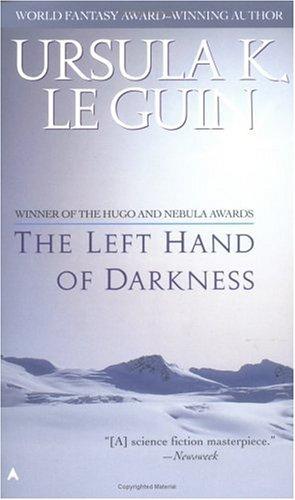
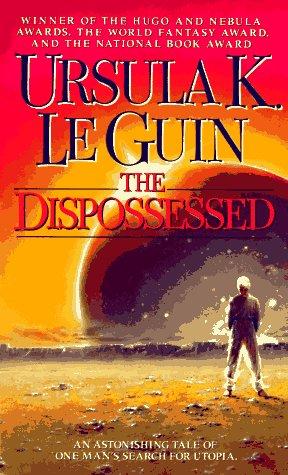
Le Guin began publishing science fiction in the early 1960s and established herself as one of the major figures of New Wave science fiction with the Hainish Cycle — a loosely connected series of novels and stories set in a universe in which a distant ancestor civilization seeded many worlds with humanoid life. The cycle includes The Left Hand of Darkness (1969), which imagines a world without fixed gender, and The Dispossessed (1974), a dual-narrative exploration of anarchist and capitalist societies that won both the Hugo and Nebula Awards. These novels demonstrated that science fiction could be a vehicle for serious anthropological, political, and philosophical thought.
Le Guin was also the author of the beloved Earthsea fantasy series, beginning with A Wizard of Earthsea (1968), which introduced a world of islands and magic centered on a protagonist of dark skin at a time when fantasy heroes were almost uniformly white. The Earthsea books, including The Tombs of Atuan, The Farthest Shore, Tehanu, and The Other Wind, are among the most sustained and philosophically rich achievements in fantasy literature. Her short fiction, collected in volumes including The Wind’s Twelve Quarters and The Unreal and the Real, is of similarly extraordinary quality.
So Far So Good (2018), available on WritersReview, is her final poetry collection, completed shortly before her death in January 2018. The poems are meditations on age, mortality, the natural world, and the difficult acceptance of an ending — written with the same clarity, precision, and philosophical courage that characterized everything she wrote. They are not elegiac in any mournful sense but rather genuinely exploratory, approaching the prospect of death with the same anthropological curiosity Le Guin brought to everything else.
Le Guin received the National Book Award for Children’s Books, multiple Hugo and Nebula Awards, the PEN/Malamud Award, the Medal for Distinguished Contribution to American Letters, and the Library of Congress Living Legend designation. She died on January 22, 2018, in Portland, Oregon. Her legacy is immeasurable: she demonstrated that genre fiction could be as formally serious, as politically engaged, and as philosophically rich as any literary fiction, and her work has influenced generations of writers across every genre.