Stieg Larsson
Stieg Larsson was born Karl Stig-Erland Larsson on August 4, 1954, in Skalleftehamn, a small town in northern Sweden. Raised largely by his maternal grandparents in a remote village, he was profoundly shaped by his grandfather, a politically engaged anti-fascist whose convictions became Larsson’s own. After his grandfather’s death Larsson returned to his parents in Umea, where he completed his education and began his lifelong commitment to left-wing journalism and anti-racist activism.
Larsson spent the bulk of his career as a journalist and editor, most notably co-founding the Swedish magazine Expo in 1995, a publication dedicated to monitoring and exposing far-right extremism and neo-Nazi activity across Scandinavia. His investigative work brought genuine personal danger, including credible death threats, and he lived under significant security precautions. This background in forensic journalism, political radicalism, and documentation of institutional misogyny saturated every page of his fiction.
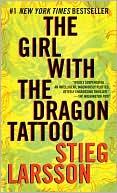
Larsson turned to fiction in his spare time, writing his Millennium trilogy primarily as a private project. The Girl with the Dragon Tattoo, published in Swedish in 2005 under the title Men Who Hate Women, introduced readers to the extraordinary computer hacker Lisbeth Salander, a state ward with a photographic memory, a genius for digital intrusion, and a personal history of abuse at the hands of powerful men. Combined with investigative journalist Mikael Blomkvist, the novel became an immediate phenomenon. The two sequels, The Girl Who Played with Fire and The Girl Who Kicked the Hornets Nest, were published posthumously and completed one of the most celebrated trilogies in crime fiction history.
Larsson died of a sudden heart attack on November 9, 2004, at the age of fifty, just months after delivering his manuscripts to his publisher. The trilogy sold over eighty million copies worldwide and was translated into more than fifty languages. Swedish film adaptations in 2009 starred Noomi Rapace as Salander, and a Hollywood adaptation directed by David Fincher was released in 2011. Larsson essentially defined the international appetite for Scandinavian crime writing known as Nordic noir, and Lisbeth Salander remains one of the most iconic protagonists in contemporary genre fiction.