Plato
Plato (c. 428–348 BCE) was born into an aristocratic Athenian family during one of the most turbulent and intellectually fertile periods in Western history. His given name was Aristocles; the name Plato — meaning broad — was a nickname, allegedly referring to his physique from wrestling. He received a thorough Athenian education and came under the influence of Socrates as a young man, a relationship that would define his entire philosophical career. The trial and execution of Socrates in 399 BCE left a permanent mark on Plato, convincing him that democratic politics was fundamentally hostile to wisdom and genuine justice.
After Socrates’ death, Plato traveled extensively through the Mediterranean — visiting mathematicians in Megara, studying in Egypt, and spending time at the court of Dionysius I of Syracuse, a visit that nearly ended in his enslavement. These experiences deepened his conviction that philosophers, not politicians, should govern. Around 387 BCE, he returned to Athens and founded the Academy, widely considered the first institution of higher learning in the Western world. It would operate for nearly nine centuries.
Plato wrote in dialogue form, using Socrates as his central interlocutor across dozens of works exploring love, the soul, knowledge, language, justice, and the structure of reality. His theory of Forms — the idea that abstractions like Beauty, Justice, and the Good are more real than physical things — became the metaphysical foundation of Western idealism. The Allegory of the Cave, from The Republic, remains one of the most famous passages in all of philosophy: prisoners chained in a cave, mistaking shadows for reality, stand as a metaphor for the unphilosophical life.
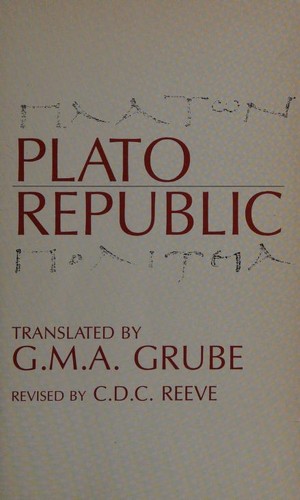
The Republic is Plato’s most ambitious work and his masterpiece. Beginning with a deceptively simple question — what is justice? — it expands into a comprehensive vision of the ideal city-state, a theory of the soul with three parts (reason, spirit, and appetite), an argument that philosophers should be kings, and a wholesale critique of poetry, democracy, and conventional morality. The dialogue’s scope is staggering, its arguments frequently radical, and its conclusions deliberately provocative. It has shaped political philosophy, theology, and educational theory from antiquity to the present.
Alfred North Whitehead’s observation that all Western philosophy is a series of footnotes to Plato captures something genuinely true. From Augustine’s theology to Kant’s idealism to contemporary debates in metaphysics and ethics, Platonic questions remain unavoidable. Plato’s literary gifts — his dramatic skill, the vivid characterization of Socrates, his capacity for extended metaphor — make his philosophy unique: rigorous yet readable, systematic yet alive. The Republic, reviewed on WritersReview.com, remains not merely a historical document but a living philosophical challenge — a vision of what it would mean for human society to take reason seriously as its highest value.