Percival Everett
Percival Everett is one of the most distinguished American novelists of his generation, an author whose prodigious and formally varied output spans more than four decades and defies easy categorisation. Born in 1956 in Fort Gordon, Georgia, he studied philosophy at the University of Miami and has a Master’s degree from Brown University. He is Distinguished Professor of English at the University of Southern California, where he has taught creative writing for many years. His academic life and his fiction exist in close dialogue: many of his novels engage directly with questions of literary form, narrative construction, and the nature of language itself.
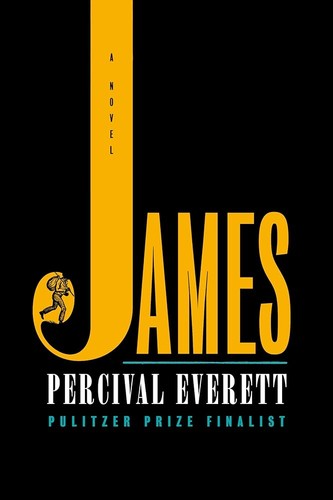
James (2024), available on WritersReview, is Everett’s retelling of Mark Twain’s Adventures of Huckleberry Finn from the perspective of the enslaved man Jim — reimagined here as James — and it became the most celebrated novel of his career to date. Winner of the Pulitzer Prize for Fiction in 2025 and the Booker Prize in 2024, the novel is a masterwork of revisionary fiction: by giving James his own interiority, his own language, and his own moral intelligence, Everett exposes the silences and evasions that run through Twain’s canonical text and, by extension, through much of the American literary tradition’s engagement with race. The novel is simultaneously a homage to and a profound interrogation of one of America’s most beloved stories.
Everett’s earlier work is equally remarkable for its range and ambition. Erasure (2001), adapted into the Academy Award-winning film American Fiction (2023), is a satirical masterpiece about a Black academic novelist whose serious literary work is ignored while his cynical parody of literary stereotyping becomes a bestseller. The Trees (2021) is a genre-bending revenge fantasy in which the victims of racial violence return to haunt their killers. I Am Not Sidney Poitier (2009) is a philosophical comedy about identity and naming. Each novel demonstrates Everett’s restless formal intelligence and his commitment to fiction that earns its intellectual ambitions through the quality of its storytelling.
Everett is also the author of numerous short story collections, children’s books, and a body of poetry, making him one of the most genuinely productive writers in American letters. His work resists the expectation that writers of any particular background must write in particular modes about particular subjects — he writes what interests him, and what interests him turns out to be almost everything: philosophy, linguistics, mythology, Western fiction, domestic realism, experimental meta-fiction. The belated wider recognition of his work, prompted by the success of American Fiction and the awards for James, has brought many new readers to a career that has always deserved the attention it is now finally receiving.