Pamela Erens
Pamela Erens is an American novelist whose work occupies a distinctive space in contemporary literary fiction, combining psychological precision with deeply felt explorations of female experience, religious identity, and the difficult intimacies of communal life. Born in New York in 1961, she studied at Yale University and went on to build a career that balances fiction writing with editorial work, most notably as a contributing editor at Lux magazine. Her path to publication was marked by the patience and persistence characteristic of serious literary novelists, and her debut novel demonstrated from the outset a voice fully formed and uncompromising in its ambitions.
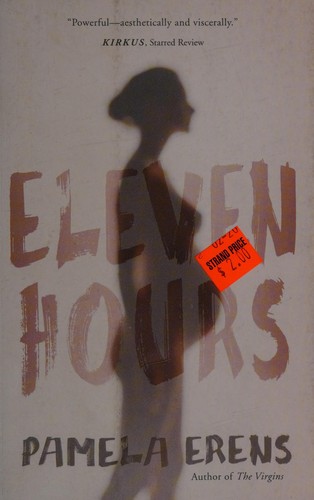
Her first novel, The Understory (2007), introduced readers to her ability to render inner lives with uncomfortable intimacy, but it was Eleven Hours (2016) that brought her sustained critical recognition. Written entirely in the present tense and structured over the course of a single day of labor and delivery, it follows two women — one giving birth, one a labor nurse — whose stories interweave in ways that illuminate questions of vulnerability, trust, and the body’s extremity. The novel’s formal rigor is matched by its emotional intelligence, and it was widely praised for making a subject rarely treated seriously in literary fiction into a vehicle for profound inquiry into womanhood and survival. Her novel The Calf with Two Heads, featured on WritersReview, extends her interest in bodies and identity into unexpected territory, examining the uncanny through the lens of contemporary fiction with characteristic unsettling grace.
Erens’s prose style is spare and exacting without being cold. She trusts her readers to inhabit discomfort, to follow characters into states of psychological extremity without being offered easy resolution. Her third novel, Eleven Hours, demonstrated her willingness to structure an entire book around a single compressed experience, stripping away backstory and context to achieve an almost unbearable intensity. Critics have noted her kinship with writers like Marilynne Robinson and Sigrid Nunez — authors who take interior experience as seriously as external event, and who believe the most consequential dramas of a life take place not in action but in perception.
Beyond her fiction, Erens has written criticism and essays that situate her within a broader intellectual tradition of writers thinking carefully about literature, gender, and the conditions of creative work. Her editorial career has given her a wide view of contemporary American letters, and this breadth is visible in the range of her novelistic concerns. She is not a writer who returns to the same subject repeatedly; each book represents a genuine imaginative departure. What persists across her work is a commitment to formal integrity and a refusal to sentimentalize the experiences she depicts. For readers willing to enter her carefully constructed worlds, Pamela Erens offers fiction of rare moral seriousness and lasting resonance.