Natasha Trethewey
Natasha Trethewey was born on April 26, 1966, in Gulfport, Mississippi, to a Black mother, Gwendolyn Ann Turnbough, and a white Canadian father, Eric Trethewey, a poet who would later teach at universities in the American South. Born in a state where their parents’ interracial marriage was still illegal under Mississippi law—the wedding took place in Ohio to circumvent this—Trethewey grew up navigating the psychic terrain of racial ambiguity in the Deep South, a formative experience that runs through all her work. Her mother was murdered by her second husband when Trethewey was nineteen, a loss that would take decades to process and that eventually became the subject of her memoir.
Trethewey studied at the University of Georgia, earned a master’s degree in poetry from Hollins University, and received her MFA in poetry from the University of Massachusetts Amherst. She joined the faculty at Emory University, where she taught for many years, and later moved to Northwestern University. In 2012 she was appointed the nineteenth Poet Laureate of the United States, a position she held through 2014—the first Southern poet to hold the position in more than fifty years and only the second African American woman.
Her poetry collections—Domestic Work (2000), Bellocq’s Ophelia (2002), Native Guard (2006), and Thrall (2012)—established her as one of the most important poets of her generation, engaged with the intersections of personal and American history, race and memory, loss and landscape. Native Guard, which won the Pulitzer Prize for Poetry in 2007, centered on the Louisiana Native Guards, an African American Union regiment that guarded Confederate prisoners of war on Ship Island, Mississippi—a history buried beneath the dominant Lost Cause narrative of the Civil War. The collection moved between this recovered history and her own grief for her mother with an elegance and emotional precision that made it a landmark of contemporary American poetry.
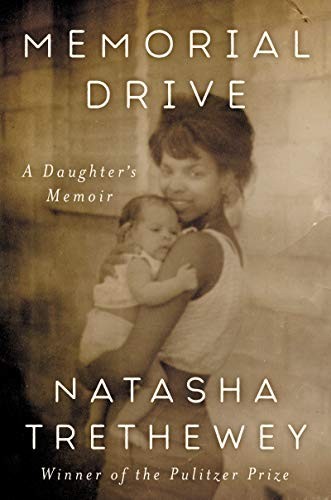
Her memoir, Memorial Drive: A Daughter’s Memoir, published in 2020, confronted her mother’s murder directly for the first time. Drawing on court documents, her mother’s diary, and her own memories, Trethewey excavated the years leading to her mother’s death and the decades of trauma and literary processing that followed. The book was both a personal reckoning and an examination of the structures—legal, social, domestic—that leave women vulnerable to the men who threaten them.
Natasha Trethewey’s work is defined by its double vision: the personal and the historical are always present simultaneously, each illuminating the other. Her poetry and prose demonstrate that the most intimate losses are always also public and political, inseparable from the larger American stories of race, place, and the selective memory that shapes how nations understand themselves.