
Summary
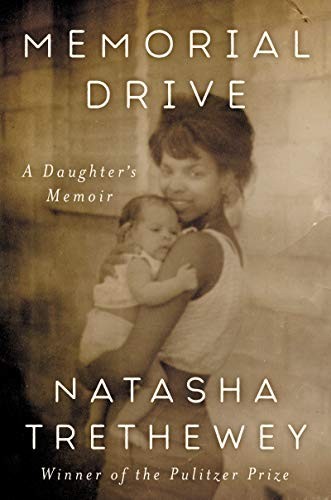
In 1985, when Natasha Trethewey was nineteen years old, her stepfather murdered her mother on a road in Atlanta called Memorial Drive. He had threatened to kill her before. Her mother had fled him before. The restraining orders and the warnings had not been enough. Trethewey has been living with this knowledge and this absence for more than three decades, and Memorial Drive is her account of what it costs to live with what cannot be changed.
Trethewey is one of the essential American poets of her generation, a two-term United States Poet Laureate and a Pulitzer Prize winner. Her poetry has returned to her mother’s death repeatedly, finding in grief a formal challenge that she has met in different ways across multiple collections. Memorial Drive is her first book-length prose account of the same material, and it is both the most direct and the most formally complex thing she has written about it.
The book moves between the present, in which Trethewey has returned to Atlanta to walk Memorial Drive and excavate her memory, and the past, in which she traces the arc of her mother’s life and death. The result is a memoir that is as much about the nature of memory and the function of storytelling in grief as it is about the specific events it recounts.
Character Arcs and Development
Trethewey writes about her mother, Gwendolyn, with the precision of someone who has had decades to understand what she saw and did not see at the time. The young Gwendolyn she describes is a woman of intelligence and warmth who found herself married to a man who would destroy her, and who tried to leave, and who was failed by the systems that should have protected her. Trethewey does not romanticize her mother or reduce her to her death. She gives her life, including the specific texture of her laughter and the quality of her attention to the world, and the death is made heavier by the life that preceded it.
The young Natasha who appears in the memoir is also fully rendered: a child caught between parents who represent different worlds, a teenager who loved her mother and also the complexity of her own developing selfhood, a young woman who would lose her mother to violence before she had fully understood what her mother was. The adult Trethewey who narrates is someone who has been shaped irrevocably by that loss and who is trying, in this book, to understand the shape.
Pacing
At 227 pages the book is short, and Trethewey uses that compression deliberately. She is a poet, and her prose has the economy and the density of poetry without being inaccessible. Every sentence carries more weight than its length suggests, and the accumulation of those sentences over 227 pages builds to an emotional force that a longer book might actually dilute.
The non-linear structure serves the book’s argument about memory: grief is not linear, and memory is not obedient, and the formal decision to move between time periods enacts what Trethewey is describing. The present-tense sections in Atlanta interrupt and illuminate the past-tense sections about her mother’s life in ways that feel organic rather than contrived.
Deeper Thematic Exploration
The book’s central concern is how we live with what cannot be undone. Trethewey is not writing a guide to grief; she is examining grief as a condition of consciousness, a way of being in time that is different from the way people who have not experienced this kind of loss inhabit time. Memory, for her, is not a reliable archive but an active process: we remember differently at different ages, with different things to protect or disclose, and what we remember shapes who we become.
The book is also, inescapably, about race and the ways that race structures vulnerability. Trethewey’s mother was a Black woman in the 1980s South, and the systems that failed to protect her from a dangerous man were systems that have historically failed Black women with particular frequency and consequence. Trethewey names this without making it the book’s only subject, which is the correct approach: the systemic failure is part of the story, not a substitute for it.
There is also a meditation on the function of poetry and storytelling in the face of what cannot be explained. Trethewey has written poems about her mother’s death for decades. The poems have not resolved the grief; they have been a way of remaining in relationship with what cannot be recovered. This memoir is another such act, and it understands itself as such.
Style and Voice
Trethewey’s prose is the work of a poet who has taken the discipline and attention of her primary form into a longer structure. The sentences are precisely weighted, the images carefully chosen, and the emotional control is remarkable given the subject. She does not perform grief; she renders it. The effect is a kind of restraint that paradoxically allows the emotion more room than a more openly expressive style would.
The decision to include the police tapes, the recorded calls in which her mother describes her fear in the days before her death, is the book’s most difficult formal choice. Trethewey transcribes these calls and contextualizes them, and the effect is devastating precisely because of its documentary quality: this is what her mother actually said, in her actual voice, and it was not enough to save her.
Verdict
Memorial Drive is a book about a particular loss that manages to be about the experience of loss itself, which is the achievement that separates memoir from journalism and literature from documentation. It does not offer comfort or resolution because it does not pretend that comfort is available. It offers instead the particular companionship of honest witness: the sense that someone has stayed with what is difficult and made something worthy of the staying.
It is not a long book, but it is a large one in all the ways that matter. It will sit with readers who encounter it in a way that very few books manage, which is a sign that it has done what it set out to do: kept faith with what cannot be kept.
Five stars: one of the essential memoirs of the twenty-first century.
What is Memorial Drive about?
Memorial Drive is Natasha Trethewey’s memoir about the murder of her mother, Gwendolyn, by her stepfather on an Atlanta highway in 1985, when Trethewey was nineteen. It is also about memory, grief, race, and the function of storytelling in the face of loss. Trethewey, a two-term US Poet Laureate and Pulitzer Prize winner, has written about her mother’s death in poetry for decades; this is her first extended prose treatment of the material.
Is this a difficult book to read emotionally?
Yes. The subject is a child’s loss of her mother to domestic violence, and Trethewey renders it with a poet’s precision and care. Some sections, particularly those involving the police tape recordings of her mother’s calls in the days before her death, are very difficult. Readers who have experienced domestic violence or the murder of a loved one may find the book particularly activating. It is, however, not gratuitous: every difficult element serves the book’s larger purpose.
Who is Natasha Trethewey?
Natasha Trethewey is an American poet who won the Pulitzer Prize for Poetry in 2007 for her collection Native Guard. She served two terms as the United States Poet Laureate (2012 to 2014). She is a professor at Northwestern University. Memorial Drive is her first memoir, though her poetry has engaged with her mother’s death throughout her career.
What are the police tapes mentioned in reviews of this book?
In the days before her murder, Trethewey’s mother called the police to report threats from her husband. The tapes of these calls were preserved, and Trethewey was able to obtain them. She transcribes them in the memoir, and the effect is devastating: hearing her mother’s voice describing her own danger, knowing that the protection she was seeking would not come in time.
How does Memorial Drive relate to Trethewey’s poetry?
Trethewey’s poetry, particularly her collections Native Guard and Thrall, has engaged with her mother’s death, her mixed-race identity, and the history of the South throughout her career. Memorial Drive is in some ways the prose explanation of what the poems have been circling: the same material approached from a different formal angle. Readers who know her poetry will find the memoir an illuminating context; readers new to her work will find the memoir an excellent introduction to her concerns.
Is Memorial Drive about race?
Race is present throughout the book but is not its only or even primary subject. Trethewey is a biracial woman, the daughter of a Black mother and a white father, and her memoir engages with what that identity meant in the 1970s South and what it has meant to her since. The murder of her mother is also contextualized within the broader history of violence against Black women, but Trethewey is careful not to reduce her mother’s specific life and death to its sociological category.
How long is Memorial Drive and how should it be read?
The memoir is 227 pages, a short book that reads more slowly than its length suggests because of the density and care of Trethewey’s prose. Most readers finish it in two to four sittings. It benefits from unhurried reading: the prose rewards the kind of attention that poetry rewards, and rushing through it would miss what makes it distinctive.
What books would you recommend alongside Memorial Drive?
Readers who respond to the memoir’s concerns might also read Trethewey’s poetry, particularly Native Guard and Monument: Poems New and Selected. For other memoirs about loss and family, Natasha Trethewey has cited Carolyn Forche’s What You Have Heard Is True and Claudia Rankine’s Citizen as works that have meant much to her. For other memoirs about domestic violence and its consequences, Jesmyn Ward’s Men We Reaped shares the Southern setting and the depth of literary attention.
Book Details
- Title
- Memorial Drive
- Author
- Natasha Trethewey
- Genre
- Biography
- Publisher
- Ecco
- Year Published
- 2020
- Pages
- 227
- ISBN
- 9780062248572
- WritersReview Rating
- 5.0 / 5