Min Jin Lee
Min Jin Lee was born in Seoul, South Korea, in 1968, and immigrated to the United States at the age of seven, settling in Queens, New York, where her parents ran a jewelry store. Her experience of the Korean immigrant community — its codes of industry and respectability, its complex relationship with both Korean tradition and American opportunity — became one of the primary subjects of her fiction. She attended Yale University, majoring in history, then Yale Law School, where she practiced as an attorney before health problems forced a change of direction. She began writing seriously during her recovery, and decades of work produced the two novels that established her as one of the most important American novelists of her generation.
Her debut novel, Free Food for Millionaires (2007), followed a Korean American woman navigating New York’s financial and professional worlds and was warmly received. But it was her second novel — the product of more than two decades of research and multiple complete drafts — that secured her literary reputation. Lee lived in Japan for three years while researching the book, immersing herself in the community of Korean Japanese people whose experience of discrimination and exclusion had been largely invisible in English-language literature.
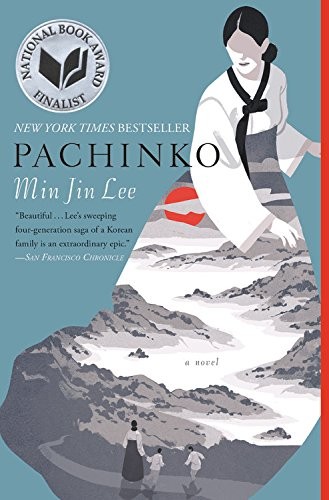
Pachinko, published in 2017, is an epic multi-generational saga spanning nearly a century — from a small Korean fishing village in 1910, through the Japanese colonial period, the Second World War, and postwar Japan’s economic transformation, to the late twentieth century — following four generations of one Korean family. The novel takes its title from the pachinko parlors that become one of the few economic avenues available to Korean residents excluded from mainstream Japanese employment. It is a work of sweeping historical scope and intimate psychological depth that honors the complexity of its characters while maintaining the narrative momentum of the finest popular fiction.
Lee’s prose is accessible, warm, and meticulously researched, grounded in the specific material realities of her characters’ lives. She writes with a historian’s respect for evidence and a novelist’s gift for inhabiting individual consciousness. Her ability to sustain emotional engagement across a century of narrative time is a considerable achievement. Pachinko was a finalist for the National Book Award, a New York Times bestseller, and was adapted into a celebrated Apple TV+ series.
Min Jin Lee’s work addresses diaspora, discrimination, and resilience with a combination of moral seriousness and narrative skill that has resonated deeply with readers worldwide. She is a powerful advocate for the stories of marginalized communities, and her commitment to her subject matter — evident in the decades of research behind Pachinko — sets a standard for the literary ambition and human respect that the best fiction can achieve.