Michael Ondaatje
Philip Michael Ondaatje was born on September 12, 1943, in Colombo, Ceylon (now Sri Lanka), into a family of Dutch, Sinhalese, and Tamil descent. His parents separated when he was young, and his childhood was divided between Ceylon and his mother’s eventual home in England. He emigrated to Canada in 1962, completing his undergraduate education at Bishop’s University in Quebec and the University of Toronto, then earning his master’s degree at Queen’s University. He joined the faculty of Glendon College at York University, where he taught literature and creative writing for many years. Canada’s multicultural literary culture proved congenial to his hybrid identity and his interest in the intersection of different histories, languages, and traditions.
Ondaatje established himself first as a poet, and his poetry has always been central to his practice as a writer. His early collections — The Dainty Monsters (1967), The Man with Seven Toes (1969), and The Collected Works of Billy the Kid (1970), which won the Governor General’s Award — showed a distinctive poetic sensibility: fragmented, imagistic, preoccupied with violence and myth, deeply attentive to the music of individual sentences. Coming Through Slaughter (1976), a prose poem or novel about the jazz cornetist Buddy Bolden, further established his reputation for work that dissolved generic boundaries between poetry, fiction, and documentary.
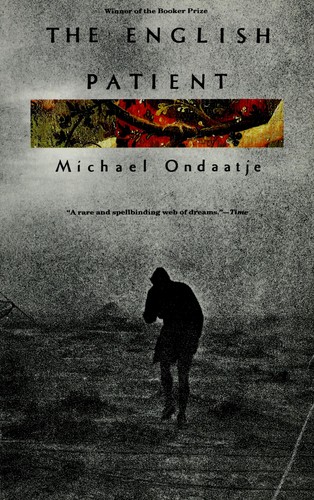
The English Patient (1992), co-winner of the Booker Prize (shared with Barry Unsworth’s Sacred Hunger), is Ondaatje’s most celebrated novel and one of the masterpieces of late-twentieth-century fiction. Set in a ruined Italian villa at the end of World War II, it assembles four wounded survivors — a burned and unidentified man who calls himself the English patient, a young Canadian nurse, a Sikh sapper, and a Canadian thief and spy — into a meditation on love, memory, identity, and the violence of nations and maps. The prose is lyrical to a degree unusual in English-language fiction, closer in its density and its willingness to subordinate plot to image and rhythm to the work of a poet than to a conventional novelist. Anthony Minghella’s Academy Award-winning film adaptation (1996) brought the novel to a massive international audience.
Ondaatje’s subsequent novels — Anil’s Ghost (2000), set amid the Sri Lankan civil war; Divisadero (2007); The Cat’s Table (2011); and Warlight (2018) — have continued to explore themes of displacement, historical violence, and the unreliability of memory and identity. His memoir Running in the Family (1982) is a fragmented, lyrical reconstruction of his Sri Lankan family history that blurs the line between autobiography and fiction. Across all these works, Ondaatje has remained committed to a prose style that prioritizes the sensory and the poetic over the expository.
Michael Ondaatje has received the Booker Prize, the Governor General’s Award (multiple times), the Kiriyama Pacific Rim Book Prize, and many other honors. He has been awarded the Golden Booker Prize — presented in 2018 for the best novel to have won the Booker in its fifty-year history — for The English Patient, confirming its status as one of the defining novels of the era. He remains one of the most gifted prose stylists writing in English, a writer for whom the sentence is as much a unit of musical composition as of narrative communication.