
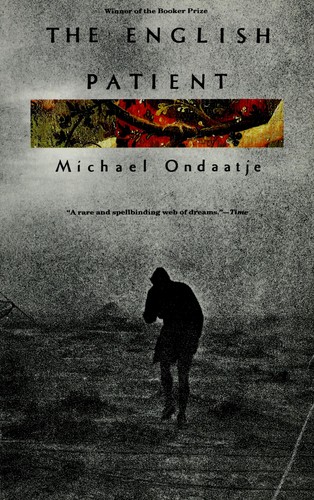
Michael Ondaatje’s The English Patient won the Booker Prize in 1992, and the award generated some controversy at the time: this was a lyrical, fragmented, elliptical novel that moved through time and place in ways that rewarded patience but resisted summary. It has since established itself as one of the defining literary novels of the 1990s, a book whose sentences are beautiful in the way that only a few writers per generation achieve and whose structure reflects the broken nature of what it is describing: the end of a war, the damage done to four people, the impossibility of going back.
What Happens in The English Patient
Near the end of World War II, a villa in Tuscany serves as a temporary refuge for four people who have been broken by the war in different ways. Hana, a young Canadian nurse, refuses to leave with the retreating Allied forces and stays behind to care for a badly burned, unidentified man found in a crashed plane – the “English patient” of the title, who turns out not to be English at all. Caravaggio, a thief who worked as a spy, arrives in search of Hana, whom he knows from before the war. Kip, a young Sikh sapper, comes to defuse the bombs left by the retreating Germans and stays, forming a relationship with Hana.
The novel’s present tense – the summer in the villa – alternates with long excursions into the past. The English patient, whose real name is Almasy, narrates his pre-war years as a desert explorer in North Africa, his love affair with a married English woman named Katharine Clifton, the catastrophe that brought him to the plane crash. These sections are rendered with the quality of memory: vivid, fragmentary, not quite linear.
The four characters circle each other in the villa, sharing meals and nights and stories, each carrying a particular kind of grief. The summer ends when a specific piece of news arrives from the Pacific. What happens after that is the novel’s most contested and most remembered sequence.
The Desert and Memory
Almasy’s sections are the novel’s most celebrated, and deservedly so. His account of the Libyan desert, of the community of desert explorers who preceded the war, of his love for Katharine – these passages achieve a quality of prose that is rare in any language. Ondaatje writes the desert as a place outside history, outside nationality, outside the categories that the war will impose. Almasy belongs to a world that believed in knowledge without borders, in the desert as a shared space for all who could survive it. The war destroys this world absolutely.
The love affair between Almasy and Katharine is rendered in fragments: scenes of intensity, long absences, the accumulation of a relationship conducted in opposition to every social constraint that surrounds it. Ondaatje is not interested in the mechanics of adultery; he is interested in the texture of longing and what it costs.
Kip and the World
Kip’s presence in the novel is its structural counterweight. While Almasy’s sections move in the register of romance and loss, Kip’s move in the register of political clarity. He is a man who has chosen to serve the British Empire in its own terms – by defusing its enemies’ bombs – while never fully trusting it. His final response to the news from the Pacific is the novel’s most direct political statement, and it lands with the force of something the book has been building toward without quite saying.
Ondaatje’s Prose
Ondaatje came to fiction from poetry, and his sentences carry that background in their rhythms and their willingness to carry multiple meanings simultaneously. He does not explain; he renders. His images are precise and unexpected. The prose rewards slow reading and benefits from being read aloud.
The novel’s structure – moving between present and past, between four different consciousnesses, across two continents – requires a reader willing to hold multiple threads in mind without the reassurance of conventional chapter markers. The difficulty is real, but it is not ornamental; the form is part of the argument about how damaged people carry their pasts.
Who This Book Is For
Readers who respond to lyrical prose, who are willing to assemble a narrative from fragments, and who want a novel that takes the damage of war seriously at the level of individual consciousness will find The English Patient essential. It is not a novel that accommodates impatience, but for readers who give it what it asks for, it offers sentences and images that stay in memory for years.
Frequently Asked Questions
- Is the English patient based on a real person?
- The character of Almasy is loosely based on Laszlo Almasy, a real Hungarian-born desert explorer and aviator who worked in the Libyan desert in the 1930s. The novel departs significantly from the historical record, and Ondaatje has said he was more interested in the mythology surrounding Almasy than in the historical facts.
- Is The English Patient easier or harder than the film?
- The film (1996, directed by Anthony Minghella, starring Ralph Fiennes and Kristin Scott Thomas) is more linear and more conventionally romantic. The novel is more fragmented and more political, particularly in its treatment of Kip’s perspective. Many readers encounter the film first and find the novel’s structure initially surprising.
- What nationality is the English patient?
- Hungarian. Almasy is a Hungarian-born explorer who worked with a multinational group in the North African desert. The English patient designation comes from the false identification made when he was found after the crash.
- Why does Hana stay in the villa?
- The novel offers multiple explanations that do not resolve into a single motivation: grief, exhaustion, a need for stillness after years of watching people die, and something specifically connected to the English patient himself. Hana does not fully understand her own reasons, and Ondaatje does not simplify them for her.
- Is The English Patient suitable for readers who don’t usually read literary fiction?
- It is challenging for any reader unaccustomed to nonlinear narrative. The effort is worthwhile, but this is not a book that meets the reader halfway. Those who find it initially difficult should give it fifty pages before deciding.
- What other books should I read if I enjoyed The English Patient?
- Ondaatje’s other novels, particularly In the Skin of a Lion and Anil’s Ghost, share the lyrical fragmented approach. W. G. Sebald’s The Rings of Saturn and Ian McEwan’s Atonement work in related territory: the long aftermath of war, the relationship between memory and narrative.
Book Details
- Title
- The English Patient
- Author
- Michael Ondaatje
- Genre
- Literary Fiction
- Publisher
- Vintage Books
- ISBN
- 9780679745204
- WritersReview Rating
- 5.0 / 5