Matt Haig
Matt Haig was born in 1975 in Sheffield, England, and grew up in the north of England before studying English and Politics at Hull University. In his late twenties he experienced a severe breakdown — a crisis of depression and anxiety so acute that he could not leave the house, stand on a cliff without fear, or contemplate a future — an experience he would later chronicle in his memoir Reasons to Stay Alive (2015), which became one of the most widely read and discussed books about mental health of the decade. Before reaching that turning point, he had rebuilt himself through reading, writing, and the support of his partner Andrea, and it is this lived knowledge of literature as rescue that shapes everything he has written since.
Haig began his career writing literary thrillers and children’s books. His children’s novel The Last Family in England (2004) was a darkly comic tale narrated by a Labrador. His YA novels, including the Shadow Forest series and To Be a Cat, developed his gift for fantastical premises deployed in service of emotional truth. But it was his adult fiction that brought him to the widest readership. The Humans (2013), in which an alien sent to Earth to erase a mathematical discovery becomes enchanted by human life, established his signature mode: speculative premises used as lenses to examine love, loss, and the strange gift of being alive.
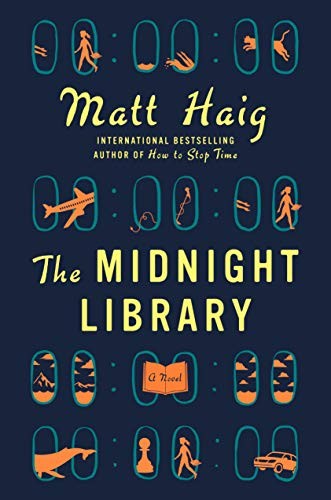
The Midnight Library (2020), available on WritersReview, became one of the best-selling novels of the decade. The novel follows Nora Seed, a woman at the point of ending her life, who finds herself in a library between life and death that contains an infinite number of books, each one representing a life she could have lived had she made different choices. As Nora explores these lives — as an Olympic swimmer, a glaciologist, a rock star — she confronts the question of what makes a life worth living. The novel spent years on bestseller lists in multiple countries, was translated into dozens of languages, and sold over ten million copies. Its central message — that regret is a kind of fiction, and that the imperfect life you have is still a life worth claiming — resonated with readers during the particular darkness of the COVID-19 pandemic.
Haig has also become one of the most prominent and consistent public voices on mental health, using his platform to speak about depression, anxiety, and the cultural pressures that exacerbate them. His non-fiction, including Reasons to Stay Alive, Notes on a Nervous Planet (2018), and The Comfort Book (2021), has found enormous readerships. He is unusual among contemporary literary figures in that his non-fiction and fiction address the same concerns with equal seriousness and accessibility.
Subsequent novels, including How to Stop Time (2017) and The Midsummer of the Novel, have continued to explore themes of time, memory, and the possibility of joy despite suffering. Haig occupies a distinctive place in contemporary letters: a writer whose commercial success is matched by a genuine commitment to reaching readers in pain and offering them something real. His work is sometimes dismissed by literary critics for its accessibility, but his readership — and the letters he receives from people who say his books kept them alive — suggests he is doing something that matters.