Madeleine L’Engle
Madeleine L’Engle was born on November 29, 1918, in New York City, and spent much of her childhood in Europe, where her father’s work as a journalist took the family. A lonely and introverted child who found solace in books and writing, L’Engle began writing stories at a young age and never stopped. She attended Smith College in Massachusetts, graduating in 1941, and began her adult life working in theatre in New York, where she met her husband, the actor Hugh Franklin. The couple eventually left New York to run a general store in rural Connecticut, and it was during this period of relative isolation that L’Engle wrote the book that would define her legacy — and that was rejected by twenty-six publishers before finding a home.
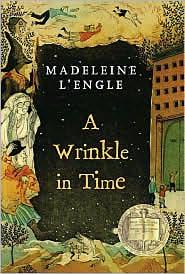
That book was A Wrinkle in Time (1962), one of the most beloved and influential children’s novels ever published. It tells the story of twelve-year-old Meg Murry, her brilliant younger brother Charles Wallace, and their friend Calvin, who travel through space and time via a phenomenon called tessering to rescue Meg and Charles Wallace’s father from the malevolent force known as IT. The novel blends science fiction, fantasy, and Christian mysticism in ways that were genuinely unprecedented in children’s literature at the time of its publication, and it won the Newbery Medal in 1963. It has since sold over 14 million copies, been translated into numerous languages, and adapted for film and television multiple times.
L’Engle’s subsequent work expanded the Murry and O’Keefe families across five novels — the Time Quintet — as well as several companion novels. Other celebrated works include Meet the Austins and its sequels, and the standalone novel A Ring of Endless Light, another Newbery Honor recipient. L’Engle’s writing seamlessly integrated her deep Christian faith with her profound engagement with physics, biology, and the nature of the cosmos, creating fiction that is simultaneously intellectually stimulating and spiritually resonant. She served for nearly thirty years as librarian and writer-in-residence at the Cathedral of St. John the Divine in New York City.
L’Engle’s influence on subsequent generations of writers and readers — particularly women writers who grew up seeing Meg Murry as a model for what a female protagonist could be — is incalculable. She wrote into her eighties, producing memoir, poetry, and fiction that continued to engage with the big questions of existence, faith, and human connection. Madeleine L’Engle died on September 6, 2007, leaving a legacy as one of the transformative figures in twentieth-century American children’s literature.