Khaled Hosseini
Khaled Hosseini was born on March 4, 1965, in Kabul, Afghanistan, the son of a diplomat father and a teacher mother. He spent his early childhood in Kabul before his father was posted to Tehran and then Paris. In 1980, after the Soviet invasion of Afghanistan, the family sought political asylum in the United States and settled in San Jose, California, where Hosseini attended high school and began the process of building a new life in an unfamiliar country. He attended Santa Clara University, majoring in biology, and then completed his medical degree at UC San Diego School of Medicine, becoming a practicing internist. He was working as a physician when he began writing fiction, drawn by the desire to tell stories about the country of his birth and its people.
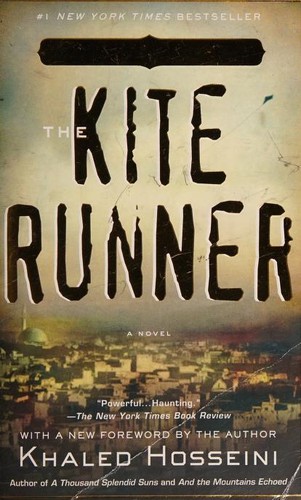
Hosseini’s debut novel, The Kite Runner (2003), was the first novel in English by an Afghan author to achieve international success. It tells the story of Amir, a privileged boy in 1970s Kabul, and his complex relationship with Hassan, the son of his father’s Hazara servant. The betrayal at the novel’s center and Amir’s decades-long attempt at redemption unfold against the backdrop of Afghanistan’s catastrophic modern history — the Soviet invasion, the civil war, the Taliban regime. The novel became a word-of-mouth phenomenon, spending more than two years on the New York Times bestseller list and eventually selling more than thirty-eight million copies worldwide.
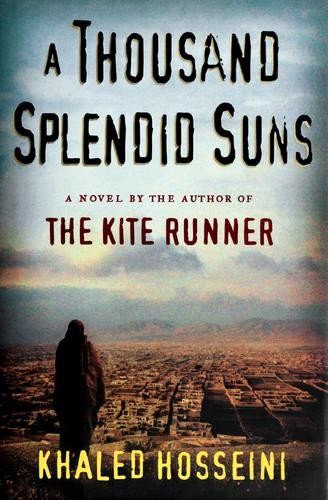
A Thousand Splendid Suns (2007) is in some respects an even more powerful achievement than the debut. It tells the story of two women — Mariam, the illegitimate daughter of a wealthy merchant, and Laila, a young woman from a more privileged background — who are forced into marriage with the same abusive man and whose relationship deepens from hostility to profound love as they endure together the violence of Kabul during the civil war and the Taliban years. The novel is a devastating account of the lives of Afghan women under successive waves of violence and repression, and it demonstrates Hosseini’s gift for embedding the sweep of historical tragedy within intimate human relationships.
Hosseini’s prose style is accessible and emotionally direct, with a gift for rendering physical and psychological suffering in terms that make it visceral without being exploitative. He writes with deep feeling for his characters and for the country they inhabit, and his best work achieves the combination of historical breadth and personal intimacy that defines the finest narrative fiction. His storytelling instinct is strong and his narrative pacing assured, qualities that help account for the extraordinary popular reach of his work.
Khaled Hosseini served as a Goodwill Ambassador for the UNHCR and founded the Khaled Hosseini Foundation to provide humanitarian assistance to the people of Afghanistan. His work has done more than that of any other writer to introduce the human reality of Afghanistan to readers around the world, and his novels have been translated into more than seventy languages. He remains one of the most widely read novelists of the twenty-first century.