Jonathan Franzen
Jonathan Franzen was born on August 17, 1959, in Western Springs, Illinois, and grew up in Webster Groves, Missouri, a middle-class suburb of St. Louis. He studied German language and literature at Swarthmore College and spent time in Germany before returning to the United States to pursue his literary ambitions. His debut novel, The Twenty-Seventh City (1988), a dense and formally ambitious political thriller set in St. Louis, and his second novel, Strong Motion (1992), established him as a writer of serious literary intentions but limited popular reach. Throughout the 1990s, Franzen struggled with the question of what the contemporary novel could and should be, publishing essays that debated the relationship between literary fiction and mass culture with a directness that generated both admiration and controversy.
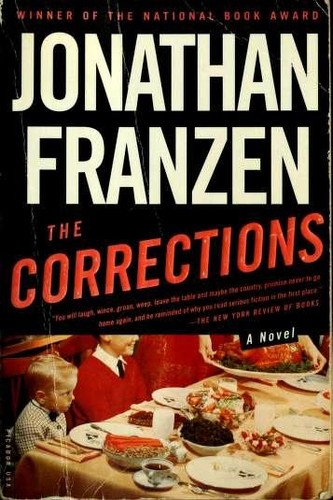
The publication of The Corrections in 2001 transformed Franzen’s career and became one of the defining literary events of the early twenty-first century. The novel follows the Lambert family — the aging, ailing Alfred and his wife Enid, and their three adult children — as they navigate the pressures and disappointments of American middle-class life in the final decades of the twentieth century. It is a novel of large social ambition and intimate psychological precision, a genuine attempt to write the great American family novel in the tradition of Tolstoy and Thomas Mann. It won the National Book Award for Fiction in 2001 and became a bestseller, making Franzen a literary celebrity of unusual magnitude, a figure whose very name became a cultural shorthand for a certain kind of serious literary ambition.
The novel’s reception was complicated when Franzen expressed ambivalence about being selected for Oprah Winfrey’s book club, suggesting that the association with popular culture might alienate his literary readership. The controversy that followed illuminated deep tensions in American literary culture about the relationship between prestige and popularity, and Franzen’s name became attached to debates about literary snobbery and the gendering of ‘serious’ fiction. His subsequent novel, Freedom (2010), was greeted with enormous anticipation and critical acclaim, appearing on the cover of Time magazine.
Franzen’s prose style is expansive, psychologically probing, and socially panoramic. He writes long, architecturally complex novels that embed individual psychological portraits within a dense weave of social observation, drawing on European realist traditions while remaining firmly grounded in American particularity. His characters are rendered with remorseless clarity, their self-deceptions and contradictions exposed with a precision that can feel both uncomfortable and illuminating.
Jonathan Franzen remains one of the most prominent and debated American novelists of his generation. His essays, collected in How to Be Alone and Farther Away, demonstrate a critical intelligence and a willingness to engage with cultural controversy that have made him as prominent a public intellectual as a novelist. His body of work constitutes a sustained and serious engagement with the question of how American fiction might tell the truth about American life.