Jeff VanderMeer
Jeff VanderMeer is an American author widely regarded as one of the leading practitioners of the New Weird, a literary movement that blends science fiction, fantasy, and horror with literary ambition and an ecological sensibility. Born in 1968 in Bellefonte, Pennsylvania, he grew up partly in the Fiji Islands, and the lush, strange environments of his childhood have clearly left a mark on his imagination. He studied literature at the University of Florida and has lived for many years in Tallahassee, Florida, a location whose subtropical ecology frequently haunts his fiction.
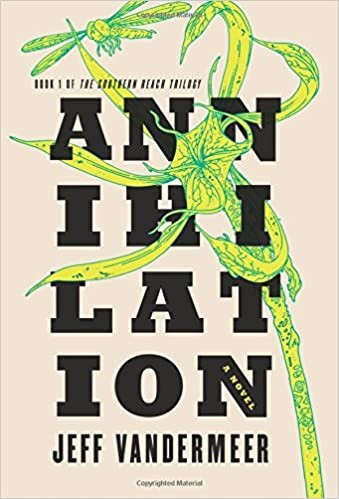
Annihilation (2014), available on WritersReview, is the first volume of his Southern Reach trilogy and the book that brought him to the attention of mainstream readers and filmmakers. The novel follows a team of four women — a biologist, an anthropologist, a surveyor, and a psychologist — as they enter Area X, a mysterious, sealed-off coastal wilderness where something unknown has transformed the environment and destroyed all previous expeditions. Written in a single month following a hypnagogic dream, the novel is a masterwork of atmospheric dread: precise and observational on the surface, building to an experience of genuine ontological unease. It was adapted into a film by Alex Garland in 2018, starring Natalie Portman, bringing VanderMeer’s singular vision to a wide international audience.
VanderMeer’s writing is characterised by its close attention to the natural world and its disquieting suggestion that nature is not a backdrop to human experience but an active, indifferent, and perhaps alien force. He is a deeply ecological writer: his fiction consistently interrogates human assumptions about the boundaries between the natural and the unnatural, the known and the unknowable. The Southern Reach trilogy has been read as an extended meditation on environmental collapse, institutional blindness, and the limits of scientific rationality in the face of the genuinely strange. His more recent novel, Borne (2017), and its companion The Strange Bird, extend these concerns into a post-apocalyptic cityscape populated with biotechnological monstrosities.
Beyond his fiction, VanderMeer is a significant figure in the SF/F community as an editor and anthologist: his Weird Fiction Reader and the New Weird anthology (co-edited with his wife, Ann VanderMeer) helped define and legitimise a literary movement. He has received multiple World Fantasy Awards, the Nebula Award, and has been a finalist for numerous other honours. He is also a vocal advocate for ecological awareness and has spoken and written extensively about the relationship between environmental destruction and the human imagination. VanderMeer represents the literary wing of science fiction at its most serious and most genuinely strange.