Howard Zinn
Howard Zinn was born on August 24, 1922, in Brooklyn, New York, the son of Jewish immigrant working-class parents. He grew up in Brooklyn tenements, worked in the Brooklyn Navy Yard and various shipyards as a young man, served as a bombardier in the United States Army Air Forces during World War II—an experience that later gave him a complex personal reckoning with the moral costs of aerial bombing—and used the GI Bill to earn his bachelor’s degree from New York University and his master’s degree and doctorate from Columbia University, specializing in history and political science.
Zinn taught at Spelman College in Atlanta from 1956 to 1963, where he became directly involved in the civil rights movement, advising the Student Nonviolent Coordinating Committee (SNCC) and participating in sit-ins and demonstrations. He was fired by Spelman’s president for his activism and his support of student protesters, an experience that confirmed his conviction that the historian’s obligation extends beyond the archive to the present struggle for justice. He subsequently joined the faculty of Boston University, where he taught political science until his retirement in 1988.
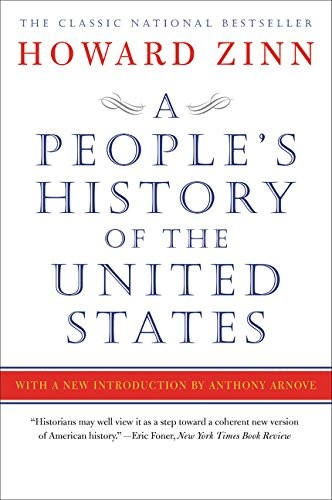
His landmark book, A People’s History of the United States, published in 1980, offered a comprehensive retelling of American history from the perspective of those it had traditionally excluded: indigenous peoples, enslaved Africans, women, immigrants, working people, and political dissidents. Rather than narrating history as the story of great men and their decisions, Zinn told it as the story of power and resistance—of how those who controlled wealth and government maintained their position, and how those at the bottom organized, struggled, and occasionally succeeded in expanding the boundaries of American democracy.
The book was controversial from the beginning—criticized by mainstream historians for its selectivity and its explicitly political framing, and embraced by leftists, educators, and generations of students who found in it a history that acknowledged their ancestors’ experiences. It sold more than two million copies, was widely assigned in high school and college history courses, and became one of the most discussed works of American historiography of the late twentieth century. Whatever its critics’ objections to its framework, it permanently changed the conversation about whose stories belong in American history.
Howard Zinn died on January 27, 2010, in Santa Monica, California, at age 87, while swimming at a hotel pool. He remained active as a speaker, writer, and activist until near the end of his life, and A People’s History continues to sell steadily and generate debate—a testament to the enduring relevance of the question it posed: who gets to decide which stories matter?