Henry James
Henry James was born on April 15, 1843, in New York City, into a wealthy and intellectually exceptional family. His father, Henry James Sr., was a Swedenborgian theologian and friend of Emerson and Thoreau; his brother William became the preeminent American philosopher and psychologist of his generation. The family moved frequently between America and Europe during Henry’s childhood, giving him a transatlantic education that made him, from his earliest years, acutely attentive to the differences between European and American culture, manners, and moral assumptions — the central preoccupation of his mature work. He attended Harvard Law School briefly before abandoning formal education to write, and published his first story in 1864.
James settled permanently in England in 1876, eventually taking British citizenship in 1915 as a statement of solidarity with Britain during World War I. He lived first in London and then in Rye, Sussex, where he wrote his major works and received a constant stream of literary visitors. His friendship network — which included Robert Louis Stevenson, Edith Wharton, Joseph Conrad, and H. G. Wells — placed him at the center of Anglo-American literary culture for four decades, and his criticism and prefaces shaped the theory of the novel in English in ways that remain influential.
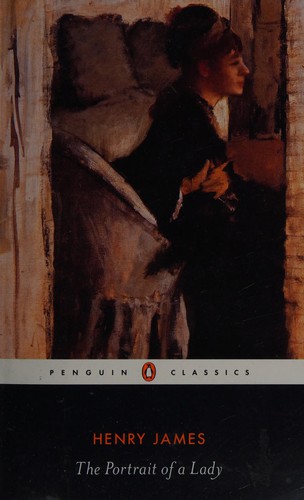
James produced three distinct phases of fiction. His early “international” novels — Roderick Hudson (1875), The American (1877), Daisy Miller (1878), and The Portrait of a Lady (1881) — established the characteristic Jamesian subject: the encounter of American innocence with European sophistication, or the collision of moral simplicity with social complexity. The Portrait of a Lady, the masterpiece of this first phase, follows Isabel Archer, a young American woman of remarkable spirit and intelligence who inherits a fortune and chooses, freely and fatally, to marry Gilbert Osmond — a choice she comes to understand, too late, as a trap. The novel is one of the great studies of female consciousness, social constraint, and the irresolvable tension between freedom and commitment in the Western tradition.
James’s late style — developed in his final three major novels, The Wings of the Dove (1902), The Ambassadors (1903), and The Golden Bowl (1904) — represents his most radical and demanding achievement. His sentences become longer, more recursive, more elaborately qualified; he retreats further and further into the interior of his characters’ consciousness, rendering not action but the movement of thought and feeling in response to action. The late novels are among the most difficult in English, and among the most rewarding: they demand and train a new kind of attention, a willingness to dwell in uncertainty and qualification that has its own extraordinary pleasures.
Henry James died on February 28, 1916, in London, having suffered two strokes. He left behind a body of work — novels, novellas, short stories, plays, criticism, travel writing, and autobiography — of unparalleled density and distinction. His influence on the modern novel in English has been profound: the techniques of limited third-person narration, free indirect discourse, and the dramatization of consciousness that he developed have become the standard equipment of literary fiction. Writers as various as Virginia Woolf, Edith Wharton, Graham Greene, and Cormac McCarthy have worked in the tradition he established.