George Saunders
George Saunders was born on December 2, 1958, in Amarillo, Texas, and grew up in the Chicago suburb of Oak Lawn, Illinois. He attended the Colorado School of Mines on a geophysics scholarship, graduating in 1981, and spent several years working as a geophysicist in Sumatra for an oil company — an experience of ecological devastation and economic exploitation that sharpened his political awareness and gave his subsequent fiction its characteristic unease about American corporate capitalism. He later attended Syracuse University’s creative writing MFA program, studying under Tobias Wolff, and after struggling financially for years in a series of blue-collar jobs, eventually joined the faculty at Syracuse, where he taught for more than two decades and became one of the most celebrated writing teachers in the country.
Saunders’s emergence as a major literary figure was gradual but, once established, emphatic. His debut story collection CivilWarLand in Bad Decline (1996) introduced his signature mode: satirical fables set in degraded near-future versions of American commercial culture, written in voices that reproduce the stunted inner monologues of people living under economic and psychological pressure. His subsequent collections — Pastoralia (2000), In Persuasion Nation (2006), and especially Tenth of December (2013), which was a finalist for the National Book Award — established him as the master of the contemporary American short story, a writer whose formal inventiveness and emotional precision placed him in a direct line from Chekhov and Twain.
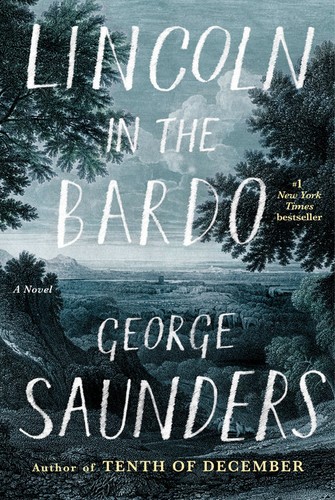
Lincoln in the Bardo, published in 2017, was his first novel and represented a bold formal departure. Set over a single night in February 1862 in the Georgetown cemetery where Abraham Lincoln’s eleven-year-old son Willie was interred, the novel draws on the Tibetan Buddhist concept of the bardo — the transitional state between death and rebirth — to tell the story of the grieving president’s nocturnal visit to his son’s tomb through a polyphonic chorus of voices, both ghostly inhabitants of the cemetery and fragments of historical documents. It is a formally dazzling and deeply moving work that won the Booker Prize in 2017.
Saunders’s prose style is startlingly distinctive: he writes in the voices of people whose inner lives have been colonized by corporate-speak, marketing language, and the degraded syntax of commercial culture, and he uses this stylistic constraint both for satirical effect and, more powerfully, to generate genuine pathos. His characters’ limited language paradoxically expresses the full range of their humanity, and the gap between what they can say and what they feel is the engine of his most affecting fiction.
George Saunders is widely regarded as one of the essential American writers of his generation. His essays, collected in The Braindead Megaphone and A Swim in a Pond in the Rain, demonstrate a critical intelligence and a generous pedagogical spirit of equal force to his fiction. His influence on the short story form and on a generation of younger writers has been substantial, and his body of work represents one of the most searching and compassionate examinations of American life in the contemporary era.