
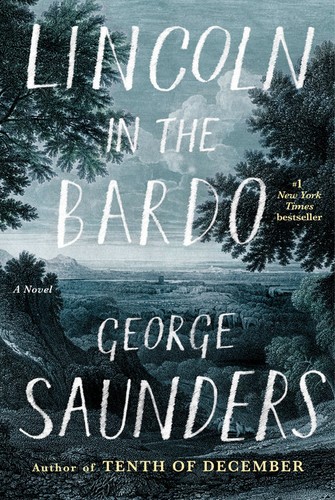
Lincoln in the Bardo
Random House · 2017 · 343 pages
ISBN: 9780812985405
🏆 Man Booker Prize (2017)
Audie Award - Audiobook of the Year (2018)
New York Times 100 Best Books of the 21st Century (2024)
Review Editor
Eleanor Marsh
George Saunders spent twenty years thinking about one image: Abraham Lincoln, alone at night in a Georgetown cemetery, cradling the body of his eleven-year-old son Willie, who had died of typhoid fever in February 1862. That single image became the seed for Saunders’s first novel, published in 2017 by Random House. Lincoln in the Bardo unfolds over a single night in Oak Hill Cemetery, where Willie Lincoln’s body has been placed in a temporary crypt. The living president visits his son’s remains. The dead, trapped in what Tibetan Buddhists call the bardo (a transitional state between death and whatever comes next), watch, argue, plead, and try to understand what is happening to them and to this grieving father.
The novel’s form is unlike anything most readers will have encountered. Saunders constructs it as a chorus of voices: dozens of ghosts narrate their stories in short, overlapping monologues, interspersed with excerpts from historical documents (some real, some invented). The effect is something like a play performed by a hundred actors on a bare stage. It won the 2017 Man Booker Prize.
Character Arcs and Development
The three central ghosts are Hans Vollman, a printer who died before consummating his marriage; Roger Bevins III, a young man who slit his wrists after a failed love affair with another man; and the Reverend Everly Thomas, who carries a terrible secret about what awaits the dead. Each clings to the belief that they are merely “sick” and will soon return to life. Their denial is both comic and devastating.
Vollman and Bevins become unlikely guardians of young Willie Lincoln. Their protectiveness grows from something self-interested into something genuinely selfless, and that transformation is the emotional spine of the book. Lincoln himself is rendered through the eyes of the dead and through contradictory historical accounts. The Lincoln who sits in the crypt, running his hands over Willie’s hair, is recognizable as a father first and a president second.
Pacing
The first fifty pages demand patience. Once the central situation clicks into place, the pacing tightens considerably. The novel’s brevity helps. At 343 pages with wide margins and short chapters, it reads faster than its experimental form might suggest. The final seventy pages are relentless, building to a climax that is both structurally inventive and emotionally overwhelming.
Deeper Thematic Exploration
At its surface, Lincoln in the Bardo is about a father’s grief. But Saunders is after something much larger: the question of what it means to let go. Every ghost in the cemetery is someone who could not let go of life. The bardo is a place of stuckness, and the novel argues that stuckness is its own kind of damnation.
Lincoln’s grief mirrors the ghosts’ predicament. When Lincoln is briefly inhabited by the spirits of the dead and experiences their accumulated memories, he comes to understand that every person who has ever lived carried a universe of feeling as vast as his own. That realization changes him. He leaves resolved to prosecute the war with greater urgency, because the suffering of the enslaved is as real and specific as the suffering of his own son.
Saunders includes the voices of enslaved people among the cemetery’s ghosts, and their testimonies are among the book’s most harrowing passages. Even in death, the Black ghosts are marginalized. Saunders does not resolve this injustice. He simply makes it visible.
Style and Voice
Each ghost has a distinctive verbal tic that makes them instantly recognizable. The prose ranges from bawdy comedy to passages of startling beauty. The historical excerpts mimic nineteenth-century memoir and journalism so convincingly that it is genuinely difficult to tell the real sources from the invented ones. This ambiguity is the point: history is always a collage of competing accounts.
Verdict
Lincoln in the Bardo is a book for readers who want fiction to surprise them. If you need a conventional narrative, this will frustrate you. But if you are willing to surrender to the chorus, the payoff is immense. The central trio of Vollman, Bevins, and Thomas are among the most memorable characters in recent American fiction, and the final pages will leave you sitting quietly for a while, thinking about the people you have lost.
Frequently Asked Questions about Lincoln in the Bardo
What is Lincoln in the Bardo by George Saunders about?
Lincoln in the Bardo is set over a single night in February 1862, in the Georgetown cemetery where Abraham Lincoln’s eleven-year-old son Willie has just been buried. The novel follows Lincoln as he visits his son’s body, while the ghosts trapped in the cemetery watch, interfere, and tell their own stories. It is a novel about grief, fatherhood, and the moral reckoning of the Civil War.
Is Lincoln in the Bardo based on a true story?
The novel is grounded in real history. Willie Lincoln did die of typhoid fever on February 20, 1862, and there are historical accounts suggesting that Abraham Lincoln visited his son’s body in the crypt. Saunders builds his fiction around these documented events, adding invented ghost characters and blending real and fabricated historical sources.
What are the main themes in Lincoln in the Bardo?
The novel explores grief and letting go, the tension between private sorrow and public duty, the moral catastrophe of slavery, and how love persists even after death. It also examines how we construct historical narratives from incomplete accounts.
How long is Lincoln in the Bardo and is it a difficult read?
The hardcover is 343 pages and reads quickly due to short chapters and spare prose. The first fifty pages can be disorienting because dozens of ghost voices speak in fragments. Once you adjust to the rhythm, it becomes compulsively readable.
Is there a movie adaptation of Lincoln in the Bardo?
A film adaptation is in development as of 2026. Tom Hanks is set to play Abraham Lincoln, with Duke Johnson directing. The celebrated audiobook version, featuring 166 voice actors including Nick Offerman and Don Cheadle, is also worth noting.
What age group is Lincoln in the Bardo for?
This is an adult novel, best suited for readers aged 16 and up. It contains frank discussions of death, some sexual content played for dark comedy, and depictions of slavery and racial violence.
How does Lincoln in the Bardo compare to Saunders’s short stories?
It retains his signature blend of dark comedy, empathy, and social critique, but the novel form allows him to build something cumulative. Fans of his stories will recognize the humor and heartbreak, but the scale and ambition are new.
Should I read Lincoln in the Bardo and is it worth it?
If you enjoy fiction that takes risks with form and rewards close attention, yes. For anyone willing to meet the book on its own terms, it is one of the most original and moving American novels of the past decade.
Book Details
- Title
- Lincoln in the Bardo
- Author
- George Saunders
- Genre
- Literary Fiction
- Publisher
- Random House
- Year Published
- 2017
- Pages
- 343
- ISBN
- 9780812985405
- Awards
- 🏆 Man Booker Prize (2017) Audie Award - Audiobook of the Year (2018) New York Times 100 Best Books of the 21st Century (2024)
- WritersReview Rating
- 4.9 / 5