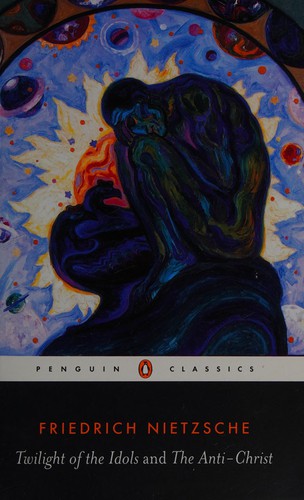
Friedrich Nietzsche
Friedrich Nietzsche (1844–1900) was born in Röcken, a small village in Saxony, the son of a Lutheran pastor who died when Friedrich was four years old. Raised in a household of women — his mother, sister, grandmother, and aunts — Nietzsche was a solitary, intense child with an exceptional memory and a precocious gift for music and language. He studied classical philology at the University of Bonn and then Leipzig, where he discovered Schopenhauer’s The World as Will and Representation and, in a bookshop, felt the book’s pessimistic vision of existence strike him like a fist. He was 21. He also encountered Richard Wagner in Leipzig, beginning an intense friendship and artistic discipleship that would shape and then define him — until he broke from Wagner entirely in one of the great intellectual ruptures of the nineteenth century.
In 1869, at the extraordinary age of twenty-four and before completing his doctorate, Nietzsche was appointed Professor of Classical Philology at the University of Basel. His first book, The Birth of Tragedy (1872), argued that Greek culture was animated by a conflict between the Apollonian (order, reason, form) and the Dionysian (chaos, intoxication, ecstasy), and that Socratic rationalism had drained Greek tragedy of its life force. The book was received poorly by professional classicists but established Nietzsche’s voice: polemical, aphoristic, willing to attack the most sacred assumptions of Western culture.
Chronic ill health — severe migraines, vision problems, digestive disorders — forced Nietzsche to resign his professorship in 1879. He spent the remaining decade of his productive life moving between boarding houses in Switzerland and Italy, writing in intense bursts during the rare periods when his pain relented. From this precarious existence came his most important works: Thus Spoke Zarathustra (1883–85), Beyond Good and Evil (1886), On the Genealogy of Morals (1887), and in the mad final months of 1888, four more books including Ecce Homo and The Antichrist. In January 1889, Nietzsche collapsed in a Turin street and never recovered his sanity. He spent his last eleven years in a vegetative state, dying in 1900.
On the Genealogy of Morals and Thus Spoke Zarathustra represent two distinct registers of Nietzsche’s genius. The Genealogy — rigorous, polemical, analytical — excavates the historical origins of moral concepts, arguing that “good” and “evil” emerged from a slave revolt in morality, a resentful inversion of aristocratic values by the weak and oppressed. Zarathustra works differently: a philosophical poem of extraordinary rhetorical power, it introduces the Übermensch, the eternal recurrence, and the death of God through the voice of the prophet Zarathustra. Together they constitute the most radical assault on Western moral assumptions since Machiavelli.
Nietzsche’s legacy is immense, contested, and frequently distorted. His sister Elisabeth, a fervent anti-Semite, edited and misrepresented his work after his breakdown, lending his name to causes he explicitly despised. His actual positions — his contempt for German nationalism, his attacks on anti-Semitism, his celebration of nobility of spirit over racial hierarchy — were systematically suppressed by this misappropriation. The recovery of Nietzsche’s genuine thought in the twentieth century, through scholars like Walter Kaufmann, revealed a thinker of dazzling subtlety and almost reckless intellectual courage. Both On the Genealogy of Morals and Thus Spoke Zarathustra, reviewed on WritersReview.com, remain among the most challenging and transformative works in the philosophical tradition.