Emily Brontë
Emily Jane Brontë was born on July 30, 1818, in Thornton, Yorkshire, England, the fifth of six children of Patrick Brontë, an Anglican clergyman, and Maria Branwell. She grew up from the age of two in Haworth, a village perched on the edge of the Yorkshire moors, and the moors became for her not merely a landscape but a spiritual condition — the outward form of the inner world she inhabited with unusual intensity. Unlike her sister Charlotte, Emily was deeply uncomfortable in the wider world. Her attempts at school and as a governess were marked by acute misery and homesickness, and she spent most of her short life in Haworth, where the moors and her own imagination supplied everything she needed.
Emily’s early creative life was dominated by the shared fantasy world of Gondal, invented with her sister Anne, a saga of passion, revenge, and political intrigue that she continued to develop throughout her life. This inner imaginative world, more than any literary influence or formal education, shaped the visionary quality of her writing. She received some schooling in Brussels alongside Charlotte in 1842, but illness brought her home after less than a year. When Charlotte discovered Emily’s poetry in 1845 and arranged for its publication alongside the poems of all three sisters under the pseudonyms Currer, Ellis, and Acton Bell, Emily was furious at the invasion of her privacy, but the decision set in motion the publication of the novel that would make her immortal.
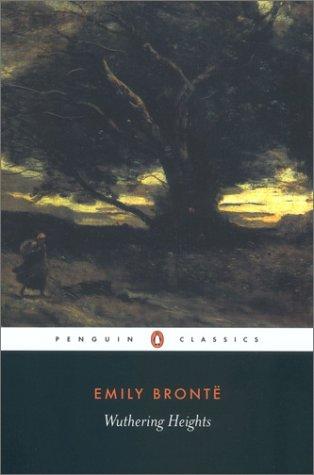
Wuthering Heights, published in December 1847, was received with bewilderment and discomfort by most contemporary reviewers, who found its passionate violence and moral ambiguity deeply unsettling. The novel recounts the savage love between the foundling Heathcliff and Catherine Earnshaw across two generations of Yorkshire families, a love so absolute it transcends social convention, individual happiness, and even death. It is a work of extraordinary originality: part Gothic romance, part social novel, part metaphysical exploration of identity and belonging, narrated through a complex double frame that emphasizes the interpretive difficulty of the passions it describes.
Emily Brontë’s prose style in her single novel is one of the most powerful and idiosyncratic in English literature. She writes without apology or softening, rendering violence, obsession, and cruelty with the same unflinching directness she brings to the beauty of the moors. The language moves between homely dialect and passages of unearthly lyricism, between the documentary and the visionary. The novel’s central relationship is rendered with a psychological intensity that feels modern, even contemporary: Heathcliff and Catherine’s famous declaration that they are the same soul anticipates later explorations of identity, desire, and the dissolution of the self.
Emily Brontë died on December 19, 1848, aged thirty, almost certainly of tuberculosis, less than a year after the publication of her novel. She never knew that Wuthering Heights would come to be regarded as one of the greatest novels in the English language. Its influence on subsequent literature — from Thomas Hardy to Sylvia Plath, from Kate Bush to countless Gothic and Romantic successors — has been immeasurable, and its central love story remains one of the most haunting and debated relationships in all of fiction.