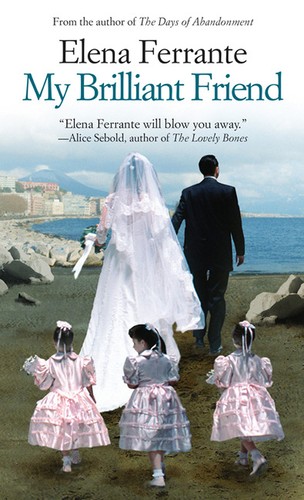
Elena Ferrante
Elena Ferrante is the pseudonym of an Italian novelist who has, since her debut in 1992, declined to reveal her identity, communicating with publishers, translators, and readers through written correspondence only. The sustained mystery of her identity is itself a literary and cultural statement: she has argued that a writer’s biography should be irrelevant to the evaluation of the work, and that the conflation of a woman’s life story with her art is a particular form of condescension to which female writers are subject. Whatever the biographical facts — and speculation has centered on a Neapolitan writer and translator named Anita Raja — the fiction speaks entirely for itself, and it speaks with an authority and intensity that has made Ferrante one of the most celebrated novelists of the twenty-first century.
Her first three novels — Troubling Love (1992), The Days of Abandonment (2002), and The Lost Daughter (2006) — established her as a writer of extraordinary psychological intensity, focused on female experience, particularly the experience of mothers, daughters, and women under emotional and social pressure. The Days of Abandonment, about a woman’s psychological disintegration after her husband leaves her for a younger woman, is a harrowing and formally accomplished study of identity dissolution that has no close parallel in contemporary fiction.
The Neapolitan Novels — My Brilliant Friend (2011), The Story of a New Name (2012), Those Who Leave and Those Who Stay (2013), and The Story of the Lost Child (2014) — constitute Ferrante’s masterwork and one of the great literary achievements of recent decades. Spanning six decades in the lives of two women, Elena Greco and Lila Cerullo, who grow up together in a violent, impoverished Naples neighborhood and whose friendship becomes the central relationship of both their lives, the tetralogy is simultaneously a social history of postwar Italy, a feminist bildungsroman, and an inquiry into female ambition, intelligence, and the costs of escape from poverty. My Brilliant Friend, the first volume, opens with Elena learning that Lila has disappeared — has erased herself from every record — and then recounts how their friendship began in the brutal, teeming neighborhood that shaped them both.
Ferrante’s prose, in Ann Goldstein’s superb translations, moves between the domestic and the sociological with seamless authority. She writes about female friendship — its love, its rivalry, its mutual dependency and mutual destruction — with an honesty that few writers have brought to the subject. Her sentences can be relentlessly propulsive, driven by an urgency of thought and feeling that makes her novels almost impossible to stop reading, and she is equally gifted with the long meditative passage and the scene of sudden, startling violence.
The Neapolitan Novels have sold millions of copies worldwide and have been translated into dozens of languages. The Italian television series L’amica geniale (broadcast internationally as My Brilliant Friend) brought the story to an even larger audience. Ferrante’s insistence on anonymity has become part of her cultural meaning — a refusal to allow the woman to overshadow the work — and the work itself has enriched and complicated the conversation about what the novel can do. She is now widely recognized as one of the essential literary voices of the contemporary era.