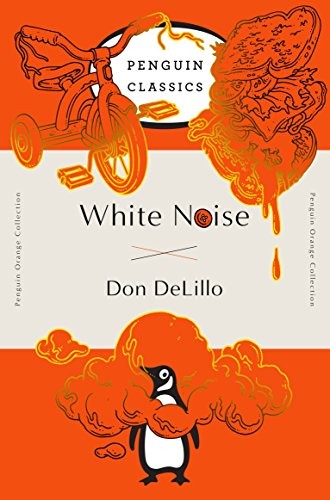
Don DeLillo
Don DeLillo was born on November 20, 1936, in the Bronx, New York, to Italian immigrant parents who had settled in the Fordham section of the borough. He grew up in a close-knit Italian American community before attending Fordham University, where he studied communication arts. After graduating in 1958, he worked for several years as a copywriter at an advertising agency — an experience that sharpened his sensitivity to the language of mass persuasion and the ways consumer culture colonizes interior life. He began writing fiction in his mid-twenties, and his early novels, including Americana (1971) and End Zone (1972), announced a writer of unusual intellectual ambition and stylistic originality.
DeLillo spent the 1970s and early 1980s developing his signature concerns in a series of increasingly accomplished novels. Ratner’s Star (1976) was a sprawling, Pynchonesque investigation of science and systems; Players (1977) and Running Dog (1978) probed terrorism and pornography; The Names (1982) explored language, cults, and American expatriates. Each book circled the same set of preoccupations: the ways in which systems of power — corporate, governmental, technological, linguistic — shape and constrain individual consciousness, and the role of violence, celebrity, and spectacle in modern life. By the time White Noise appeared in 1985, DeLillo had developed a fictional method fully equal to these themes.
White Noise, winner of the National Book Award, is widely considered the defining postmodern American novel of the 1980s. Set at a small midwestern college, it follows Jack Gladney, a professor of Hitler Studies, as he navigates a marriage, a fractious academic world, and an ‘airborne toxic event’ that forces an evacuation and confronts him with his deep fear of death. The novel is by turns comic and terrifying, its surface bristling with the noise of consumer culture — brand names, TV voices, supermarket abundance — while its depths open onto genuine metaphysical dread. It established DeLillo as the foremost diagnostician of late-capitalist American anxiety.
DeLillo’s prose style is spare, cool, and aphoristic, punctuated by sudden eruptions of lyricism or dark comedy. His dialogue has a stylized, almost theatrical quality, as though his characters are always performing their speech rather than simply speaking it. He is a writer of ideas, but his ideas are always embodied in scene and voice, never abstract. His later masterwork Underworld (1997), a vast novel tracing the Cold War through its material artifacts, confirmed him as one of the great American novelists of the twentieth century.
Don DeLillo’s influence on American fiction has been enormous and continuing. He helped define a mode of literary engagement with mass culture, technology, and institutional power that shaped an entire generation of writers. His body of work — seventeen novels and several plays — constitutes one of the most sustained and rigorous literary explorations of American experience in the postwar era, and White Noise remains its essential starting point.