Chinua Achebe
Albert Chinualumogu Achebe was born on November 16, 1930, in Ogidi, a large village in southeastern Nigeria, the fifth of six children of Isaiah Okafor Achebe, a teacher in a missionary school, and Janet Iloegbunam. His upbringing was defined by the intersection of Igbo cultural tradition and Christian missionary education — a dual inheritance that would become the central subject of his fiction and that he experienced personally, growing up in a household where traditional Igbo ceremonies and Christian prayer coexisted in complex, sometimes uneasy proximity. He attended the Government College at Umuahia, one of Nigeria’s finest colonial secondary schools, where he received an excellent education, and then the University College at Ibadan, where he read English literature and began to understand the profound distortions in the way Africa had been represented in the Western literary tradition.
The experience of reading Joseph Conrad’s Heart of Darkness as a student — finding himself positioned, as he later wrote, on the side of the colonizer rather than the African — was a galvanizing intellectual moment. If Africa was to be represented honestly in literature, Achebe concluded, Africans would have to write that literature themselves. He began working on a novel that would depict Igbo society on the eve of colonialism from the inside, from the perspective of people who had a fully realized culture, a complex moral world, and a history that was not merely the absence of European civilization.
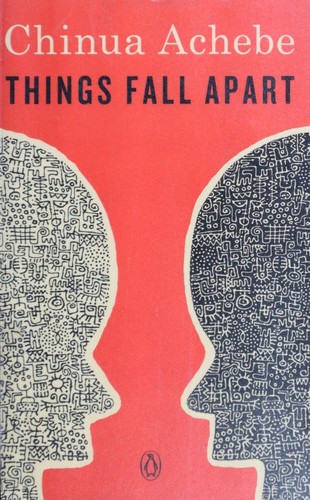
Things Fall Apart, published in 1958, was the result, and it transformed African literature permanently. The novel follows Okonkwo, a proud and powerful man in the Igbo village of Umuofia, whose world is disrupted and ultimately destroyed by the arrival of British missionaries and colonial administrators. The novel takes its title from W.B. Yeats’s poem ‘The Second Coming,’ and the allusion is deliberate: Achebe was writing back to the Western literary tradition, using its own materials to dismantle its assumptions. The novel is told with a controlled irony and a profound empathy for all its characters — including those who embrace the new order — that gives it a moral complexity far beyond simple anti-colonial polemic.
Achebe’s prose style in Things Fall Apart is deceptively simple — clear, direct, and shaped by the oral storytelling traditions of Igbo culture, including proverbs, folktales, and communal narrative — while achieving effects of considerable subtlety and depth. The simplicity is not naivety but mastery: a formal choice that enacts the values of the culture being described. The novel has been translated into more than fifty languages and has sold more than twenty million copies, making it the most widely read work of African literature in existence.
Chinua Achebe died on March 21, 2013, in Boston. His subsequent novels — including No Longer at Ease (1960), Arrow of God (1964), and Anthills of the Savannah (1987) — confirmed and extended the achievement of his debut, and his critical essays, collected in Morning Yet on Creation Day and Hopes and Impediments, established him as one of the most important voices in postcolonial literary theory. He is recognized as the father of African literature in English and one of the essential writers of the twentieth century.