Chimamanda Ngozi Adichie
Chimamanda Ngozi Adichie was born on September 15, 1977, in Enugu, Nigeria, and grew up in the university town of Nsukka, where her father was a professor and her mother the first female registrar at the University of Nigeria. Her childhood in a middle-class academic household gave her access to books and learning, but it was the tensions of Nigerian history — the legacy of Biafra, the texture of Igbo culture, the dynamics of postcolonial identity — that would become the essential subjects of her fiction. She began writing stories as a child, initially reproducing the world of the British and American books she read, before discovering African literature and realizing she could write about her own world.
Adichie moved to the United States in 1996, studying at Eastern Connecticut State University before earning a master’s degree in creative writing from Johns Hopkins University and another in African history from Yale. This dual grounding in craft and history gave her fiction its characteristic combination of narrative elegance and historical depth. Her debut novel, Purple Hibiscus (2003), a story of a young girl navigating an authoritarian father in postcolonial Nigeria, won the Commonwealth Writers’ Prize and established her as a major new voice in world literature.
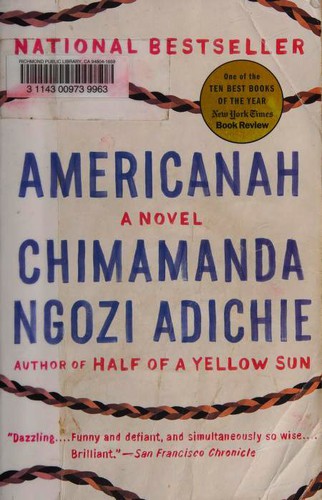
Americanah, published in 2013, is widely considered her most ambitious work. The novel follows Ifemelu, a young Nigerian woman who immigrates to the United States and becomes a blogger writing about race in America, and her childhood love Obinze, who attempts illegal immigration to the United Kingdom. Through their story, Adichie examines race with a freshness made possible by the outsider’s perspective: Ifemelu observes American racial categories as a woman who did not consider herself ‘Black’ until she arrived in America. The novel won the National Book Critics Circle Award.
Adichie’s prose is warm, intelligent, and acutely observed. She writes with a sociologist’s eye for the codes of class and culture and a novelist’s gift for rendering them through individual lives. Beyond her novels, her TED talk ‘We Should All Be Feminists’ became a global phenomenon, sampled by Beyoncé and distributed to Swedish schoolchildren, bringing her ideas about gender equality to an audience of millions.
Adichie is among the most prominent literary voices of her generation. Her novel Half of a Yellow Sun (2006), a sweeping account of the Biafran War, won the Orange Prize for Fiction. Her influence on contemporary literature and feminist discourse is profound, and she remains one of the essential writers examining the intersections of race, gender, and belonging in the modern world.