Charles Yu
Charles Yu is an American author and television writer whose fiction blends metafiction, genre experimentation, and deeply personal meditations on Asian American identity, family, and the strange pressure of immigrant aspiration. Born in 1976, Yu grew up in Southern California in a Taiwanese American family, and he has described his childhood and upbringing as a formative pressure on his imagination—the experience of living between cultures, of performing a self for different audiences, of inheriting the weight of parents’ sacrifices and dreams. He studied at UCLA and earned his JD from Columbia Law School before abandoning a legal career to write fiction, a choice that itself became material for his work.
Yu’s debut story collection, Third Class Superhero (2006), announced a writer with a gift for speculative premises deployed with emotional precision. His first novel, How to Live Safely in a Science Fictional Universe (2010), was a deeply original work of metafiction in which a time machine repairman named Charles Yu searches for his missing father through a time loop structure that is simultaneously a meditation on memory, regret, and the stories we tell ourselves. The novel was named a Time magazine Top 10 Fiction Book of the Year and established Yu as one of the most formally innovative voices in contemporary American literature.
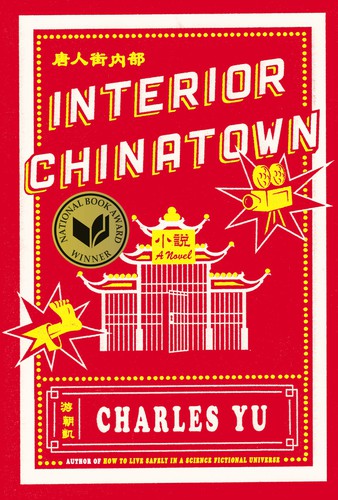
Interior Chinatown (2020), featured on WritersReview, represents Yu’s fullest artistic statement to date. Written in the form of a screenplay—complete with stage directions, scene headings, and a protagonist named Willis Wu who is cast as “Background Oriental Male” in an imagined TV procedural called Black and White—the novel examines the limited roles available to Asian Americans in American life and culture, both literally and metaphorically. Funny, formally daring, and emotionally devastating, the book uses its metafictional apparatus to explore how narrative shapes identity and how stereotypes become internalized. It won the National Book Award for Fiction and was adapted into a television series for Hulu, which Yu co-created and for which he served as showrunner.
Yu’s parallel career in television has included writing for Westworld, Legion, and Station Eleven, and the sensibility of prestige television—its interest in nested narratives, unreliable realities, and the recursive quality of storytelling—inflects his fiction without reducing it. His prose has the quality of thought caught in motion, simultaneously playful and searching.
Yu lives in Los Angeles and continues to work across fiction and television, occupying a unique position in American letters as a writer whose formal experiments are always grounded in questions that matter: who gets to tell their own story, and what happens to those who don’t.