Audrey Magee
Audrey Magee is an Irish novelist whose work engages with the deep history and unresolved trauma of twentieth-century Europe, approaching questions of violence, colonialism, and human cruelty through formally inventive fiction that refuses the consolations of conventional narrative. Born in Ireland in 1966, she spent years working as a journalist, including postings in Moscow and Berlin, and this experience of reporting on political upheaval and its human costs is clearly visible in the documentary attentiveness of her fiction. She lives in County Wicklow, Ireland, and her writing has been shaped by both the specific histories of her own country and the broader European catastrophes of the last hundred years.
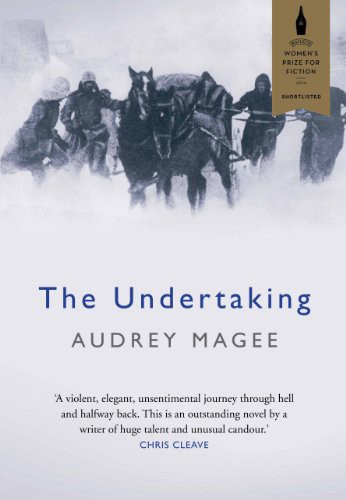
Her debut novel, The Undertaking (2014), set during the Second World War and following a German soldier and his arranged-marriage bride whose lives converge and diverge against the backdrop of the Eastern Front and the Nazi regime’s final collapse, announced the arrival of a major literary talent. The novel was shortlisted for the Baileys Women’s Prize for Fiction and received widespread critical acclaim for its moral seriousness and its willingness to inhabit perpetrator perspectives without either excusing or aestheticizing their violence. It demonstrated Magee’s ability to write about historical atrocity with the unflinching precision of a journalist and the formal control of a literary novelist. Her second novel, The Colony (2022), reviewed on WritersReview, extends these concerns into the history of Irish colonial experience, using the visit of an English artist to a remote Irish island in the summer of 1979 — as the Troubles intensify on the mainland — to examine questions of cultural possession, artistic exploitation, and the long shadows of empire.
The Colony was shortlisted for the Booker Prize in 2022, confirming Magee’s position as one of the most important Irish writers of her generation. The novel’s formal structure — alternating between an almost theatrical economy of dialogue and lyrical descriptions of landscape — reflects its thematic concerns with the relationship between representation and ownership, between who gets to tell a story and whose story is being told. Magee writes with a clarity that can seem simple until you look closely and find that almost nothing is decorative, that every formal choice is doing precise conceptual work.
Magee’s literary affinities are with writers like J.M. Coetzee, Colm Tóibín, and Anne Enright — novelists for whom form and content are inseparable, and for whom the act of writing fiction about violence and dispossession carries its own ethical freight. Her work asks its readers to remain uncomfortable, to resist the desire for resolution that genre narrative typically provides. She is a writer who earns her readers’ trust precisely by refusing to make things easy, and her two novels together constitute one of the most compelling bodies of work in contemporary Irish literature.