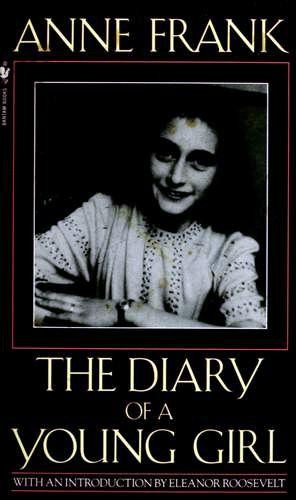
Anne Frank
Annelies Marie Frank was born on June 12, 1929, in Frankfurt, Germany, into a Jewish family with deep roots in German culture. Her father, Otto Frank, was a businessman who had served in the German Army in World War I; her mother, Edith, came from a prosperous Jewish family. The rise of National Socialism forced the Frank family to flee Germany in 1933, when Anne was just four years old. They settled in Amsterdam, Netherlands, where Otto established a business. Anne and her older sister Margot grew up as happy, assimilated children in their adopted city, attending school and living the ordinary life of a prewar European childhood.
The German occupation of the Netherlands, which began in May 1940, rapidly narrowed the world available to Jewish families. By 1942, Jews were subject to increasingly severe restrictions—required to wear yellow stars, banned from public transport, schools, and shops. In July 1942, the family went into hiding, joined shortly by four other Jewish refugees, in a concealed apartment above Otto Frank’s office building—the place that would become known as the Secret Annex. It was here, during more than two years in hiding, that Anne Frank kept the diary that would become one of the most significant documents of the twentieth century.
The Diary of a Young Girl, available on Writers Review, was given to Anne as a birthday present in June 1942, just before the family went into hiding. She wrote in it with extraordinary consistency and increasing sophistication over the following two years, recording not only the daily anxieties and frustrations of life in confinement but also her developing intellectual life, her emotional turbulence, her observations of the other inhabitants of the Annex, her dreams for the future, and her deepening reflections on human nature, justice, and the meaning of suffering. After hearing a radio broadcast in which a Dutch minister called for citizens to preserve documents of the occupation, Anne began revising her diary with an eye toward eventual publication. The diary she left behind when she was arrested was a work in progress: raw in places, artfully composed in others, and consistently remarkable in its psychological and moral depth.
Anne Frank and the other inhabitants of the Secret Annex were arrested by the Gestapo on August 4, 1944. Anne and Margot were transported to Bergen-Belsen concentration camp, where both died of typhus in February or March 1945, just weeks before the camp was liberated. Otto Frank, the sole survivor of the Annex’s eight inhabitants, returned to Amsterdam after the war to find that his secretary Miep Gies had preserved Anne’s papers. He worked for years to bring the diary to publication, and it appeared in Dutch in 1947. An English translation followed in 1952, and the diary has since been translated into more than seventy languages.
The legacy of Anne Frank and her diary is immeasurable. The diary has served for generations of readers as both a historical document of the Holocaust and an intimate portrait of a young person’s inner life—her humor, her ambition, her capacity for love, her refusal of despair. The Anne Frank House in Amsterdam receives more than a million visitors annually, and the diary is among the most widely read books in the world. Anne Frank’s voice, preserved against all odds, continues to speak across generations as a testament to both the possibilities of human courage and the consequences of human cruelty.