
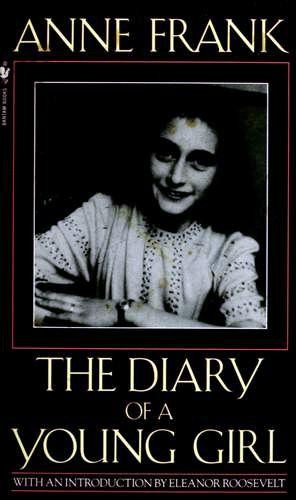
The Diary of a Young Girl
Bantam Books · 1947 · 283 pages
ISBN: 9780553296983
Review Editor
Priya Nair
Anne Frank was thirteen years old when she received a small, red-checkered diary as a birthday present on June 12, 1942. She was a Jewish girl growing up in Amsterdam, an occupied city where the Nazi regime had been steadily tightening its grip since the German invasion of the Netherlands in May 1940. She began writing to an imaginary friend she named Kitty, the kind of confessional address that any teenager might adopt. Within two months, the diary had become something else entirely: the only record we have of twenty-five months lived in a hidden annex of rooms above an office building on the Prinsengracht canal, where Anne, her parents Otto and Edith, her sister Margot, and four other Jews hid from a regime that intended to kill them.
The Secret Annex, as Anne called it, occupied the upper floors of the building that housed Otto Frank’s spice and pectin business. Entry was concealed behind a hinged bookcase. Eight people shared the space: the Franks, the van Pels family (Hermann, Auguste, and their teenage son Peter), and Fritz Pfeffer, a dentist who joined them later. They relied on a small group of trusted non-Jewish employees for food, news, and contact with the outside world. Anne recorded all of it: the rules governing noise and movement, the rationing of food, the arguments, the birthdays, the radio bulletins from the Allied front, her studies, her reading list, and the complex social weather of eight people confined together indefinitely with no visible end.
In August 1944, the Annex was raided by the Gestapo after an informant’s tip. All eight inhabitants were arrested and deported to concentration camps. Anne died of typhus in Bergen-Belsen in February or March 1945, weeks before the camp was liberated. She was fifteen. Otto Frank, the only Annex survivor, returned to Amsterdam and found that his colleague Miep Gies had preserved Anne’s papers. He arranged for publication. The Dutch edition appeared in 1947. The English translation followed in 1952. The book has since been translated into more than seventy languages and has sold tens of millions of copies worldwide.
Character Arcs and Development
The diary belongs entirely to Anne, and she is a remarkable subject: genuinely complicated, self-aware in ways that feel unusual for a thirteen-year-old, and honest enough about her own contradictions to keep the reading continuously surprising. She opens as a sociable, confident girl who has many friends and finds herself almost too popular for her own peace. By the time the diary ends, she has been enclosed in a few hundred square feet for two years, has fallen into a complicated friendship with Peter van Pels, has revised her feelings about her mother and her father multiple times, and has thought her way toward a personal philosophy she can actually articulate and defend.
The development is not smooth. Anne’s relationship with her mother Edith is one of the most honestly painful threads in the book. She writes dismissively and sometimes cruelly about her mother, who she finds cold and incapable of understanding her. She feels closer to her father Otto, whose quiet steadiness she trusts completely, but she also comes to question whether her idealization of him is entirely fair. The willingness to revise her own feelings, including the affectionate ones, is part of what makes her portrait of Annex life so credible.
The other inhabitants come through with varying degrees of vividness, mostly through Anne’s observations, which range from affectionate to withering. Fritz Pfeffer, the dentist who shares Anne’s room, receives some of her sharpest writing. His fussiness about space, his precise morning grooming schedule, his patronizing manner toward her: Anne catalogs these habits with a precision that reads more like good journalism than diary-keeping. Hermann and Auguste van Pels emerge as a couple under real strain, prone to arguments that Anne watches with something like a journalist’s eye. Peter van Pels begins as an awkward, mild boy and gradually becomes the person Anne spends the most time with and eventually comes to care for. Her later assessment of that closeness, questioning whether what she felt was genuine love or loneliness seeking an outlet, is among the most mature passages in the diary.
Pacing
A diary has no conventional narrative shape, and The Diary of a Young Girl is best understood as a document of duration rather than a plot. The early entries carry novelty and energy: Anne’s voice is confident and fun, the transition to hiding is fresh, and the logistics of Annex life are new enough to be genuinely interesting. As months accumulate, the pace slows and the entries become more inward. The claustrophobia that settles over the middle section is not a flaw but a reflection of the actual experience being recorded: time moving slowly inside four walls while the outside world lurches toward catastrophe.
Some readers find the early sections lighter than they expect. Some find the middle stretch repetitive in places where Anne documents the same household tensions for what seems like the tenth time. Neither observation is wrong. But the overall trajectory is one of deepening. The entries from late 1943 onward contain Anne’s most sustained and philosophical writing, and they earn the emotional weight they carry. The diary’s final entry, dated August 1, 1944, is quietly devastating to read, not because of what Anne says (she is analyzing her own split personality with characteristic wit and self-criticism) but because the reader knows what comes three days later.
Deeper Thematic Exploration
The most obvious frame for this book is historical: a first-person Jewish account of life under Nazi occupation, preserved despite every effort to erase it. That frame is essential. But the diary resists reduction to a single purpose, including that one.
Anne writes persistently about identity. The Nazis define her by one category: Jewish. The Annex defines her by others: the young one, the noisy one, the difficult child. She pushes back against both sets of definitions throughout the diary, trying to locate the self underneath them. Her passage about the “two Annes,” the loud public one and the serious private one who she rarely lets anyone see, is not adolescent melodrama. It is a genuinely observed distinction, and she returns to it throughout, testing whether the gap between the two selves can ever be closed.
Her relationship with faith is one of the most quietly remarkable elements of the book. She does not write as someone who inherited belief and never questioned it. She works out her relationship with God through the diary, asking hard questions and arriving at positions she can defend. Her near-final declaration that she still believes people are good at heart (written in July 1944, as the Allied liberation she has been waiting for finally seems close) is not wishful thinking. She knows what the war has done. The statement is a deliberate moral choice, and she makes it with her eyes open.
The diary is also one of the most precise accounts of adolescence in modern literature. Anne’s preoccupations, her feelings about her body, her romantic longing, her arguments with her mother, her hunger for independence and for recognition, are not merely touching historical artifacts. They are recognizable across generations. The book works across time partly because Anne’s interior life is rendered so accurately that readers find something of themselves in it regardless of when they read it.
Style and Voice
Anne Frank had genuine literary ability. Her sentences are clear and controlled, her humor is dry rather than performed, and her transitions between registers (from light observation to sustained reflection) feel natural rather than labored. After she heard a Dutch radio broadcast in March 1944 encouraging people to preserve their wartime writings for future readers, she went back and revised earlier entries with a readership in mind. The version we have is partly a journalist’s retrospective edit, which gives it a quality of intentionality that pure diary-keeping rarely achieves.
Her humor is a consistent surprise. The passages about Pfeffer’s habits (his claiming of a precise half of the shared writing table, his rigid morning grooming schedule, his manner of speaking to her as if she were still a small child) are genuinely funny. So are some of the set-piece Annex arguments. The lightness coexists with the weight rather than undercutting it. She allows both to be present on the same page without resolving the tension between them, and that combination is one of the things that makes the diary feel so alive.
Verdict
The Diary of a Young Girl belongs to that small group of books that changes how you see things. It is not comfortable, and it is not meant to be. Reading it now, knowing what happened, you carry that knowledge through every page. But the experience is not only grief. Anne Frank is such good company, so honest and funny and searching, that spending time with her diary is genuinely enriching in ways that are harder to explain than they should be.
The book is essential reading for anyone trying to understand the twentieth century, and not only for what it documents about Nazi persecution. It is also one of the sharpest portraits of early selfhood in modern literature: a young woman working out who she is under conditions designed to prevent exactly that kind of self-determination. Readers who expect only a Holocaust document will be surprised by its range, its wit, and its author’s stubborn insistence on becoming herself.
If you read this book in school and remember it as purely sad, read it again. You will find a more complicated and more remarkable book waiting for you. And if you have never read it: do not let it sit on the list any longer.
Frequently Asked Questions about The Diary of a Young Girl
What is The Diary of a Young Girl by Anne Frank about?
The Diary of a Young Girl is the real diary kept by Anne Frank, a Jewish teenager who hid with her family and four others in a concealed annex in Amsterdam during the Nazi occupation of the Netherlands. Written between June 1942 and August 1944, it records more than two years of life in confinement: daily routines, relationships, fears, and Anne’s evolving inner life. Her father Otto Frank arranged publication after the war; Anne and six of the seven other Annex inhabitants did not survive.
Is The Diary of a Young Girl a true story?
Yes. The diary is an authentic document, written by Anne Frank during the actual events it describes. Anne was arrested in August 1944, deported to Auschwitz, and transferred to Bergen-Belsen, where she died in early 1945. Her father Otto Frank, the sole survivor among the Annex’s eight inhabitants, returned to Amsterdam after liberation and found that Miep Gies had preserved Anne’s papers. He edited them for publication, and the Dutch edition appeared in 1947.
What are the main themes in The Diary of a Young Girl?
Four major themes run through the diary. Identity and selfhood: Anne struggles against the categories others impose on her (Jew, child, nuisance) and tries to articulate who she actually is beneath them. Persecution and survival: the external framework of Nazi occupation shapes every entry. Faith and moral courage: Anne works out her relationship with God and with goodness through the diary rather than inheriting answers. And adolescence itself: the diary is one of the most precise accounts in modern literature of the experience of growing up and the gap between the self you show others and the one you keep private.
How long is The Diary of a Young Girl and is it a difficult read?
The standard Bantam paperback edition runs about 283 pages, and most readers finish it in three to five hours of reading time. The prose is clear and accessible, not stylistically demanding. The difficulty is emotional rather than linguistic: the reader carries the knowledge of what happens to Anne throughout, and the book does not let you forget it. It is not appropriate for readers who want something light, but it requires no specialized knowledge to follow.
Is there a movie or TV adaptation of The Diary of a Young Girl?
Several adaptations exist. The most prominent is the 1959 Hollywood film directed by George Stevens, which won three Academy Awards including Best Supporting Actress for Shelley Winters. A 1980 NBC TV miniseries won three Emmy Awards. A 2001 Dutch film offered a more intimate version of the story. The Broadway play adapted by Frances Goodrich and Albert Hackett won the Pulitzer Prize for Drama and the Tony Award for Best Play in 1956, making it one of the most decorated theatrical adaptations in American history.
What age group is The Diary of a Young Girl appropriate for?
Most readers encounter the diary in middle or high school, typically around ages 12 to 16, and that range is broadly appropriate. The book contains no explicit violence (the events outside the Annex reach Anne through radio broadcasts and fragments of news), but it carries significant emotional weight, and the historical context of the Holocaust benefits from prior knowledge. Adult readers coming to it for the first time will find it no less valuable. The book rewards rereading at different stages of life and tends to mean something different each time.
How does The Diary of a Young Girl compare to other Holocaust memoirs?
Among Holocaust literature, the diary is distinctive because Anne wrote during the events rather than after them. Works like Elie Wiesel’s Night and Primo Levi’s Survival in Auschwitz offer the perspective of retrospect; Anne’s diary has immediacy and the quality of not knowing how the story ends. It is also unusual in its concern with interior life: Anne is as interested in her own psychology and development as in the external catastrophe around her. This combination of historical witness and genuine literary self-examination puts it in a category largely its own.
Should I read The Diary of a Young Girl and is it worth it?
Yes, without qualification. It is one of the most widely read books of the twentieth century for reasons that hold up on close examination: Anne Frank had genuine literary talent, a sharp eye, and unusual self-knowledge for her age and circumstances. The diary works as history, as memoir, and as one of the more honest portraits of adolescence in modern literature. Readers who approach it as only a Holocaust document will be surprised by its range and its humor. If you read it in school and remember it as purely sad, read it again. You will find a more complicated and more remarkable book.
Book Details
- Title
- The Diary of a Young Girl
- Author
- Anne Frank
- Genre
- Biography
- Publisher
- Bantam Books
- Year Published
- 1947
- Pages
- 283
- ISBN
- 9780553296983
- WritersReview Rating
- 4.8 / 5