Ann Leckie
Ann Leckie is an American science fiction author whose debut novel achieved one of the most remarkable award sweeps in the history of the genre, immediately establishing her as a major new voice in science fiction. She studied music at Washington University in St. Louis and worked in a variety of capacities — including as a restaurant manager and a recording engineer — before her fiction career took off. She was also the editor of GigaNotoSaurus, an online magazine publishing long-form science fiction and fantasy, developing a deep engagement with the field before her own work brought her to prominence.
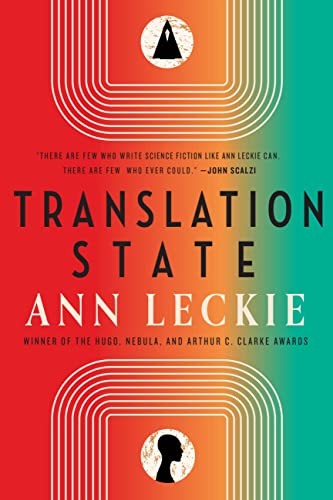
Ancillary Justice (2013), the first volume of her Imperial Radch trilogy, won the Hugo, Nebula, Clarke, BSFA, and Locus Awards — the first novel to win all five major science fiction awards. The novel is narrated by Breq, the last surviving fragment of a once-vast warship AI, and its exploration of empire, loyalty, justice, and identity is conducted with considerable formal ingenuity, most famously through its use of a default female pronoun for all characters — a device that forces readers to examine their own gendered assumptions with every page. The trilogy is a landmark of twenty-first-century science fiction, and its influence on the field has been substantial. Translation State (2023), set in the same universe and available on WritersReview, won the Hugo Award for Best Novel in 2024, demonstrating that Leckie’s command of this richly imagined setting remains as powerful as ever.
Leckie’s fiction is characterised by its interest in the political and ethical dimensions of empire — how institutions reproduce themselves, how individuals are shaped by and occasionally resist those institutions, and how questions of personhood and moral worth are used to justify exploitation. These themes are handled not through didactic exposition but through plot and character: her novels are gripping stories first and philosophical investigations second, and the two are inseparable. Her world-building is dense and confident, deploying its complexity gradually without the infodumping that afflicts lesser science fiction.
Her other works include the standalone novel Provenance (2017), set in the same universe as the Radch trilogy, and a fantasy series beginning with The Raven Tower (2019), which uses a second-person narration addressed to a god and demonstrates Leckie’s willingness to take formal risks across different genre modes. She is widely recognised as one of the most significant science fiction authors currently working, and her influence — on questions of representation in the genre, on the formal possibilities of SF narration, and on the ongoing relevance of the space opera form — has been considerable.