Viktor Frankl
Viktor Emil Frankl was born on March 26, 1905, in Vienna, Austria, into a Jewish family with deep intellectual and spiritual traditions. From a young age he showed an extraordinary interest in psychology, corresponding with Sigmund Freud as a teenager and publishing his first paper in a psychoanalytic journal at eighteen. He studied medicine at the University of Vienna and went on to specialize in neurology and psychiatry, eventually developing his own school of psychotherapy, which he called logotherapy—from the Greek logos, meaning meaning. Logotherapy held that the primary human drive is not pleasure or power, as Freud and Adler proposed, but the search for meaning in one’s existence.
Frankl’s theoretical framework was forged in the most devastating crucible imaginable. In 1942, he and his family were deported to the Nazi concentration camps. He was imprisoned successively at Theresienstadt, Auschwitz, and two satellite camps of Dachau. His parents, brother, and pregnant wife all perished. In the camps, Frankl observed—and lived—the question of how human beings find reasons to survive when stripped of everything. He noticed that prisoners who retained a sense of meaning, who could envision a future or hold onto a purpose beyond the immediate horror, were more likely to endure than those who had lost all sense of why they should survive.
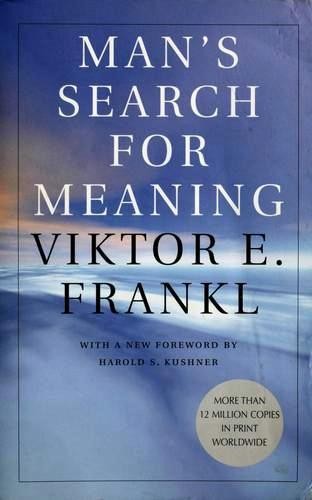
After liberation in 1945, Frankl dictated the manuscript for Man’s Search for Meaning in just nine days, drawing on notes he had reconstructed from scraps hidden in his coat lining. First published in German in 1946, the book was translated into English in 1959 and became a landmark of twentieth-century thought. The American Library of Congress designated it one of the ten most influential books in the United States. It has sold more than sixteen million copies in over fifty languages and remains essential reading in psychology, philosophy, theology, and leadership education worldwide.
Returning to Vienna after the war, Frankl became head of the Neurology Department at the Vienna Polyclinic Hospital, a post he held for twenty-five years. He lectured at universities across Europe, the United States, and Asia, and received thirty-three honorary doctorates from institutions including Harvard, Duquesne, and Loyola. He wrote more than thirty books expanding the principles of logotherapy into clinical practice, existential analysis, and the philosophy of suffering, humor, and love. He also took up mountain climbing in his sixties and earned a pilot’s license at sixty-seven.
Viktor Frankl died on September 2, 1997, in Vienna, at age 92. His work endures not simply as a record of survival but as an argument—made with calm authority and hard-won evidence—that human beings are always free to choose their response to any circumstance, and that finding meaning in suffering is among the most powerful acts available to a conscious mind. Man’s Search for Meaning remains a touchstone for anyone grappling with questions of purpose, resilience, and what makes a life worth living.