Verónica Moscoso
Verónica Moscoso is an Ecuadorian author whose fiction explores the lives of women navigating the contradictions of Latin American society—the pressures of family expectation, colonial legacy, class division, and gender—with a lyrical intensity rooted in the specific landscapes and histories of Ecuador. Born in Quito, Moscoso has built a literary reputation in the Spanish-speaking world through her precise, emotionally charged prose and her willingness to give voice to characters existing at the margins of official narratives, women whose inner lives have rarely been rendered with the complexity and dignity they deserve.
Moscoso’s fiction draws on the rich tradition of Latin American literary writing while resisting the more fantastical tendencies of magical realism in favor of a psychological realism attentive to the material conditions of her characters’ lives. Her work explores the way history sediments in the body, the way inequality shapes intimacy, and the forms of resistance available to women for whom the grandest gestures are unavailable. Her sentences carry the compression of poetry, each word chosen to bear more weight than its ordinary usage would suggest.
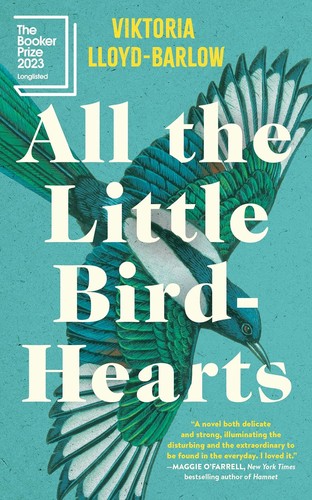
All the Little Bird-Hearts, featured on WritersReview, demonstrates Moscoso’s characteristic gifts: a finely calibrated attention to the small ceremonies of domestic life that are also the small indignities of constrained existence, and an emotional honesty that refuses the consolations of false resolution. The novel follows its protagonist with the patience of a writer who trusts that ordinary life, rendered faithfully, reveals extraordinary complexity—that the story of a woman in a particular place and time is also a story about what that place and time demand of women, and what those demands cost.
Moscoso’s style is marked by a controlled lyricism that resists both sentimentality and the cold detachment of purely ironic fiction. She writes about love, loss, and survival with the conviction that these experiences, when taken seriously, constitute their own form of knowledge—one that literature is uniquely positioned to transmit. Her work has been praised by critics in Ecuador and beyond for its formal intelligence and its ethical seriousness.
As part of a generation of Latin American women writers who have expanded the possibilities of the novel in Spanish, Moscoso joins a tradition that includes writers from across the continent in insisting on the full humanity of lives that official culture tends to render invisible. Her fiction is an act of attention—slow, precise, and ultimately transformative.