Umberto Eco
Umberto Eco was born on January 5, 1932, in Alessandria, in the Piedmont region of northern Italy, the son of a bookkeeper and the grandson of a foundling — a fact he would later investigate in his novel The Mysterious Flame of Queen Loana. He was educated by the Salesian order and studied medieval philosophy and literature at the University of Turin, writing his doctoral thesis on the aesthetics of Thomas Aquinas. He went on to become one of the most distinguished literary scholars and semioticians of the twentieth century, holding a chair at the University of Bologna for most of his academic career and publishing foundational work in semiotics — the study of signs and meaning — that made him famous in academic circles worldwide before most general readers had heard his name. His theoretical works, including A Theory of Semiotics (1976) and The Role of the Reader (1979), remain central texts in the field.
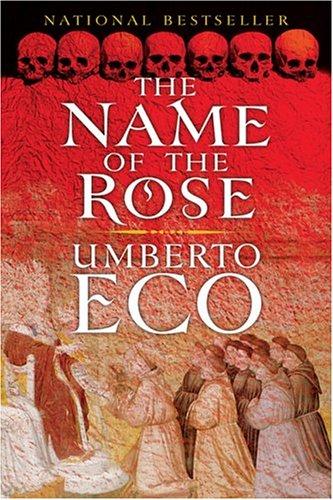
Eco turned to fiction relatively late — he was forty-eight when his first novel appeared — but the result was one of the most celebrated literary debuts of the twentieth century. The Name of the Rose (1980) is set in a fourteenth-century Italian monastery where a series of mysterious deaths among the monks requires investigation by the Franciscan friar William of Baskerville and his novice Adso of Melk (their relationship deliberately echoing Holmes and Watson). The novel is simultaneously a medieval murder mystery, a theological debate, a meditation on the nature of laughter, truth, and the power of books, and a tour de force of historical reconstruction. It became an international bestseller of a kind virtually without precedent for a novel of such intellectual density, eventually selling tens of millions of copies and being translated into more than fifty languages.
The Name of the Rose works on multiple levels simultaneously: as a gripping narrative, it delivers the pleasures of a classic detective story with genuine ingenuity; as a work of medieval scholarship, it recreates the intellectual world of the fourteenth century with astonishing depth and detail; as a philosophical novel, it meditates on the relationship between knowledge, power, and destruction. The library at the novel’s center — a labyrinthine structure that is both the repository of all knowledge and a machine for concealing and destroying it — is one of the great symbolic constructions in modern fiction.
Eco’s subsequent novels — Foucault’s Pendulum (1988), The Island of the Day Before (1994), Baudolino (2000), and The Prague Cemetery (2010) — continued to explore history, conspiracy, language, and the production of meaning, often in a playfully erudite mode that assumed an enormously well-read audience while remaining accessible to those outside the academy. He was also an enormously productive journalist and essayist, contributing regularly to Italian newspapers and publishing several collections of essays that addressed contemporary politics, media, and culture with the same breadth and wit as his fiction.
Umberto Eco died on February 19, 2016, in Milan, from pancreatic cancer. He was awarded honorary degrees by more than forty universities and received numerous literary prizes. His achievement in bridging the worlds of academic theory and popular fiction was unique — he brought the concerns of medieval theology, semiotics, and hermeneutics into conversation with millions of general readers without condescending to either his subject matter or his audience. The Name of the Rose remains one of the most intelligent and pleasurable novels of the twentieth century.