Thanhha Lai
Thanhha Lai was born in 1965 in the Mekong Delta region of Vietnam and spent her early childhood in a country torn by war. When Saigon fell in April 1975, Lai’s family fled Vietnam as refugees, eventually making their way to the United States and settling in Alabama. This experience of displacement, loss, and the difficult but ultimately hopeful process of building a new life in an unfamiliar country would become the foundation of her literary work. Lai attended the University of Alabama and later earned a Master of Fine Arts degree in creative writing from New York University, where she developed the skills and perspective that would shape her debut as a major voice in children’s and young adult literature.
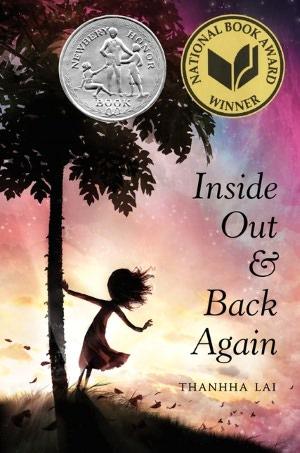
Lai’s debut novel-in-verse, Inside Out and Back Again (2011), drew directly from her family’s experience as Vietnamese refugees settling in the American South. Told through the voice of ten-year-old Ha, who must navigate the confusion, grief, and small triumphs of life as a refugee child adjusting to an entirely new culture, language, and identity, the novel captures the immigrant experience with extraordinary precision and grace. The book’s verse format — short, compressed poems that function as diary entries — allows Lai to convey Ha’s fragmented emotional world with a poetic intensity that won immediate critical acclaim.
The novel won the National Book Award for Young People’s Literature and received a Newbery Honor, establishing Lai as one of the most important new voices in children’s literature. It has since become a widely taught text in schools across the United States, valued both for its literary quality and for the window it opens into experiences often absent from mainstream American children’s books. Lai’s follow-up novel, Listen, Slowly (2015), continued her exploration of Vietnamese American identity through the story of a twelve-year-old American girl sent to Vietnam for the summer, navigating the tension between her American identity and her Vietnamese heritage.
Lai’s writing is celebrated for its lyrical precision, its emotional honesty, and its ability to render the immigrant experience — with all its grief, humor, confusion, and hope — in terms that are universally accessible and deeply moving. She writes with particular sensitivity about the experience of children caught between cultures, and about the quiet acts of courage that define survival and adaptation. Thanhha Lai lives in New York City and continues to write, her work serving as an essential bridge between the Vietnamese American experience and the broader American readership that has embraced her voice.