Ted Chiang
Ted Chiang is widely regarded as the finest short fiction writer working in science fiction today, a distinction made all the more remarkable by the modesty of his output — fewer than twenty stories published over more than three decades — and the extraordinary consistency with which each one has been received as a landmark of the form. Born in 1967 in Port Jefferson, New York, he studied computer science at Brown University before settling in the Seattle area, where he works as a technical writer for the software industry. This dual life — software professional by day, occasional but devastating fiction writer by vocation — has become one of the defining biographical facts of contemporary American letters.
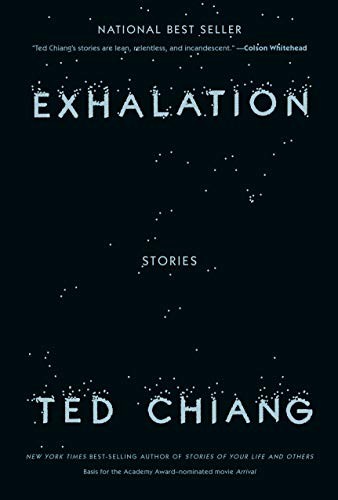
Chiang’s debut story, “Tower of Babylon,” won the Nebula Award in 1990, an almost unheard-of achievement for a first published work. In the decades since, he has accumulated four Hugo Awards, four Nebula Awards, four Locus Awards, and the John W. Campbell Award for Best New Writer, a tally that reflects both his peers’ admiration and readers’ devotion. His two collections, Stories of Your Life and Others (2002) and Exhalation: Stories (2019) — the latter of which is reviewed on WritersReview — have secured his reputation as a writer of genuine philosophical ambition, one who uses the conventions of speculative fiction not for escapism but for rigorous inquiry into questions of consciousness, free will, language, and what it means to be human in a world increasingly shaped by technology.
What distinguishes Chiang from most science fiction writers is his commitment to thinking through his premises with full intellectual seriousness. A Chiang story typically begins with a speculative premise — what if a drug could activate the visual cortex of congenitally blind people, revealing a world of abstract mathematical beauty? What if an AI became genuinely smarter than any human? — and then follows that premise to its logical and emotional conclusions without hedging, without sentimentality, and without the shortcuts that lesser writers use to make difficulty palatable. The title story of Stories of Your Life became the basis for the film Arrival (2016), introducing his work to a vastly wider audience, though the story itself remains more radical and more intellectually demanding than any film adaptation could fully render.
Exhalation: Stories, his second collection, confirms and deepens everything promised by the first. The title story — a meditation on entropy, consciousness, and the heat death of the universe narrated by a being made of air — is widely considered one of the greatest science fiction stories ever written. The collection as a whole grapples with artificial intelligence, memory, free will, and the ethics of technological augmentation with a clarity and humanity that feel increasingly urgent. Chiang does not moralize; he illuminates. His fiction asks hard questions and trusts readers to sit with the difficulty of the answers, or the absence of answers. In an era of enormous output and diminishing patience, his insistence on taking the time necessary to do each story right has made him one of the essential voices in American literature.