Tayari Jones
Tayari Jones is an American novelist whose fiction has consistently illuminated the interior lives of Black Americans with emotional precision and moral seriousness, exploring how race, class, family, and love intersect and collide in contemporary life. Born in 1970 in Atlanta, Georgia, Jones grew up in the historically Black Atlanta University Center neighborhood, surrounded by the institutions and culture of Black middle-class Atlanta—an upbringing that has shaped the social texture of all her novels. She earned her BA from Spelman College, her MFA from the University of Iowa Writers’ Workshop, and a PhD from Arizona State University, and has taught creative writing at universities including Rutgers, the University of Tennessee, and Emory University.
Jones’s debut novel, Leaving Atlanta (2002), drew on the Atlanta child murders of 1979–1981 to explore the terror and resilience of a Black community under siege, told through three children’s perspectives. The novel established Jones’s gift for rendering childhood consciousness and community memory with documentary precision and novelistic intimacy. Her second novel, The Untelling (2005), examined the long aftermath of a car accident on a young woman and her family. Silver Sparrow (2011), perhaps her most structurally ambitious work before her breakthrough, explored a bigamous family in Atlanta through alternating perspectives of the two daughters—one legitimate, one secret—with shattering effect.
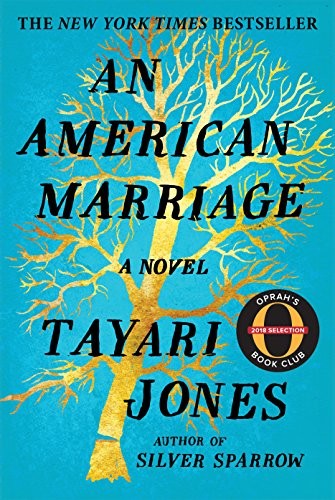
An American Marriage (2018), featured on WritersReview, catapulted Jones to the front ranks of American fiction. The novel follows Roy and Celestial, a young Black couple in Atlanta whose marriage is shattered when Roy is wrongfully convicted of a crime he did not commit. Told in alternating voices and through an exchange of letters, the novel explores not just the injustice of the carceral system but the quieter devastation it inflicts on the people who love those it imprisons—on marriages, dreams, and the individual self. Oprah Winfrey selected it for her Book Club, calling it “a landmark work in our national story,” and the novel became a number-one New York Times bestseller. It won the Women’s Prize for Fiction and was longlisted for the Booker Prize.
Jones’s prose is deceptively plain—she writes without stylistic showiness, trusting the emotional truth of her situations to generate their own intensity. She is a writer of tremendous psychological insight, particularly regarding the way people love imperfectly and the way external forces can corrupt the most intimate human bonds. Her novels are also deeply embedded in their Atlanta settings, documenting a Black middle-class experience that American fiction has historically underrepresented.
Jones has received fellowships from the Radcliffe Institute for Advanced Study, the Bread Loaf Writers’ Conference, and other institutions. She is a professor of creative writing at Emory University and remains one of the essential novelists in American literary fiction—a writer whose work is simultaneously a record of specific lives and an act of moral witness about justice, love, and what America does to its people.