Pema Chodron
Pema Chodron is an American-born Tibetan Buddhist nun and author whose teachings on working with fear, uncertainty, suffering, and groundlessness have made her one of the most beloved and influential Western Buddhist teachers of the twentieth and twenty-first centuries. Her gift for making ancient contemplative wisdom accessible and personally relevant to contemporary Western readers has introduced millions of people to the transformative potential of Buddhist practice.
Born Deirdre Blomfield-Brown in New York City in 1936, Chodron was educated at UC Berkeley and the University of California, taught elementary school, and was married twice before the breakdown of her second marriage in 1972 became, paradoxically, the gateway to her spiritual path. Encountering the teachings of the Tibetan Buddhist master Chögyam Trungpa Rinpoche, she found a framework for working with pain and uncertainty that resonated deeply, and she took refuge vows as a Buddhist in 1974.
She went on to become one of Chögyam Trungpa’s most accomplished students, and was later ordained as a novice Buddhist nun in 1974 and as a fully ordained nun in the Chinese Buddhist lineage in 1981. She became the director of Gampo Abbey, a Tibetan Buddhist monastery in Cape Breton, Nova Scotia — the first Tibetan Buddhist monastery established for Westerners — and has served as a teacher there for over four decades.
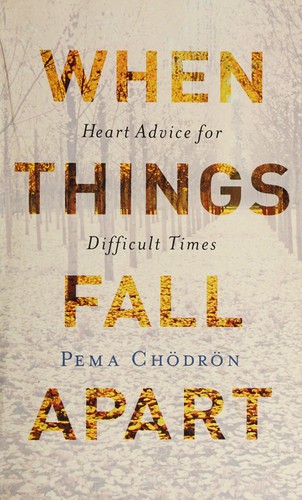
Chodron’s written work is extensive and includes some of the most widely read Buddhist titles in the English language. When Things Fall Apart: Heart Advice for Difficult Times (1997) is perhaps her most celebrated book — a collection of teachings that approaches suffering, loss, and groundlessness not as problems to be overcome but as the very ground on which genuine compassion and awakening can be cultivated. The Places That Scare You: A Guide to Fearlessness in Difficult Times (2001), Start Where You Are: A Guide to Compassionate Living (1994), and Comfortable with Uncertainty (2002) further develop her central themes of befriending difficulty, practicing tonglen (compassion meditation), and embracing impermanence.
Her work has found a vast audience among people who are not practicing Buddhists — readers drawn to her practical wisdom about how to work with emotional pain, anxiety, and the inevitable losses of human life. Her willingness to speak from her own experience of vulnerability and confusion, combined with the depth of her contemplative training, gives her teachings an authenticity and accessibility that formal doctrinal presentations rarely achieve. Chodron remains one of the most important voices bringing Buddhist wisdom into dialogue with the challenges of contemporary Western life.