Paulo Coelho
Paulo Coelho is one of the most widely read and translated authors in history, a Brazilian novelist whose work has touched the lives of hundreds of millions of readers across more than 170 countries. His books, which blend parable, philosophy, spiritual quest, and storytelling with a deceptively simple clarity, have made him not only a literary phenomenon but a genuine cultural force — someone whose words have guided individual lives and shaped popular spirituality on a global scale.
Coelho was born in Rio de Janeiro in 1947 into a middle-class family. His early life was marked by turbulence: he was committed to a psychiatric institution three times by parents who could not understand his artistic temperament, was briefly involved with leftist politics during Brazil’s military dictatorship, and was imprisoned and tortured by the regime. He worked as a songwriter, writing lyrics for some of Brazil’s most celebrated musicians, including Raul Seixas, before his life was transformed by a pilgrimage along the Camino de Santiago in 1986 — an experience that ignited the spiritual and literary journey that would define his career.
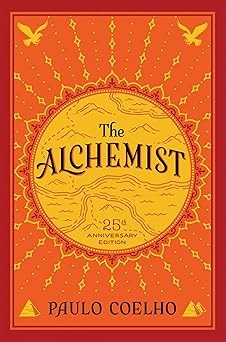
His first novel, The Pilgrimage (1987), chronicled his experience on the Camino. But it was his second novel, The Alchemist (1988), that made him a global literary figure. The story of a young Andalusian shepherd named Santiago who travels in search of treasure and discovers the importance of following one’s “Personal Legend,” The Alchemist became one of the bestselling books in history — with over 150 million copies sold, it holds a Guinness World Record as the most translated book by a living author. Its central message — that the universe conspires to help those who pursue their true purpose — has resonated across cultures, religions, and generations.
Coelho’s subsequent works have explored equally profound themes. Eleven Minutes (2003) examines love and sexuality through the story of a young Brazilian woman working as a prostitute in Geneva. Veronika Decides to Die (1998), drawn partly from his own psychiatric institutionalization, explores sanity, conformity, and the courage to live authentically. The Zahir (2005), By the River Piedra I Sat Down and Wept (1994), and The Valkyries (1992) further demonstrate his range across themes of love, faith, destiny, and spiritual transformation.
Coelho has received numerous international honors, including the Crystal Award from the World Economic Forum, the Chevalier de l’Ordre National de la Légion d’honneur from France, and the Hans Christian Andersen Award from Denmark. He has served as a United Nations Messenger of Peace and maintains one of the most-followed social media presences of any author alive. His work endures because it speaks to something universal: the longing to live a life of purpose, to trust one’s intuitions, and to remain faithful to the dreams that make life worth living.